
'Brown Beauty' by Misha Meghna - Edition One
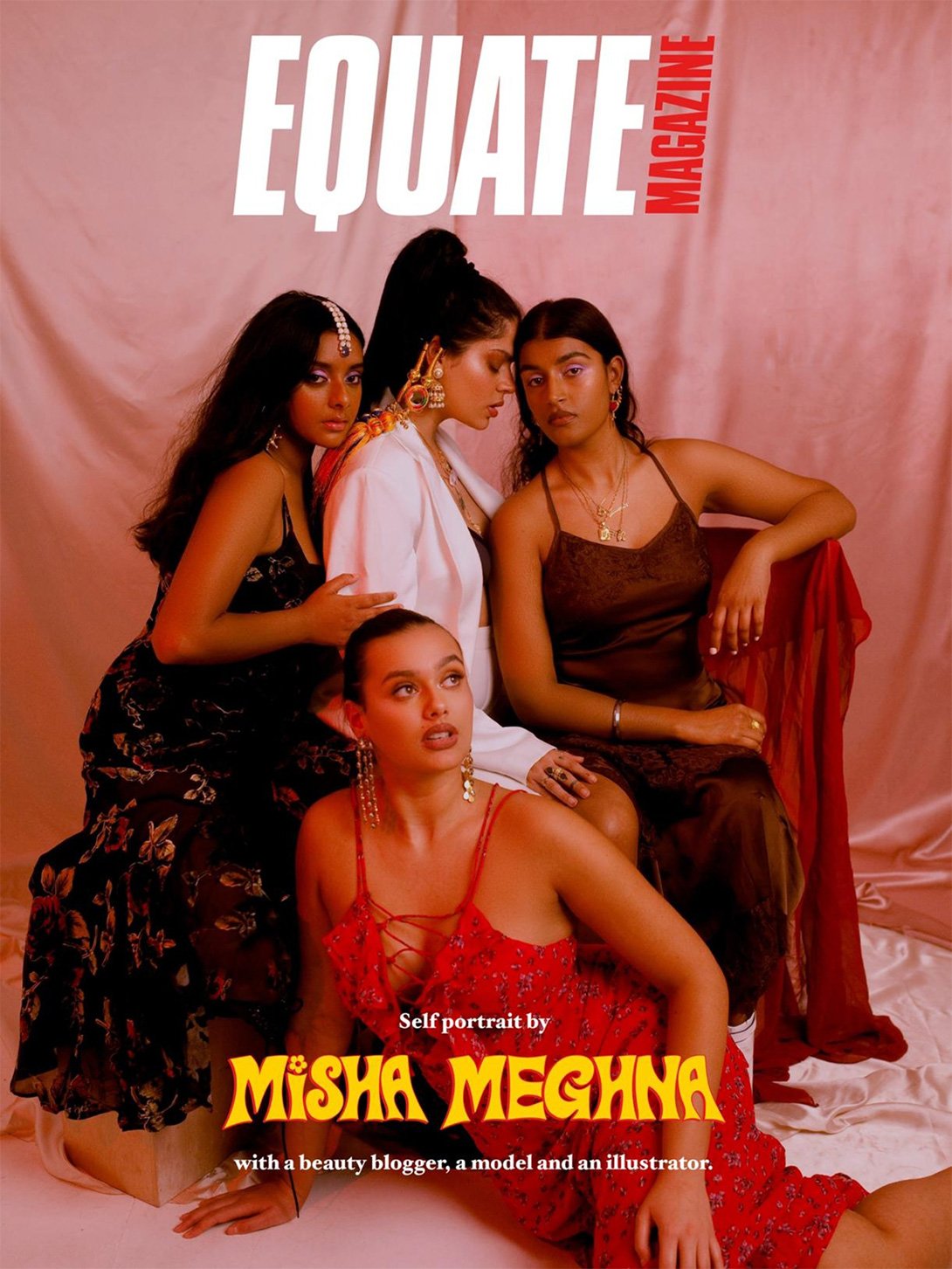


Edition 1 - ‘Brown Beauty’ Self Portrait Cover Story from Misha Meghna
Misha on Karmi
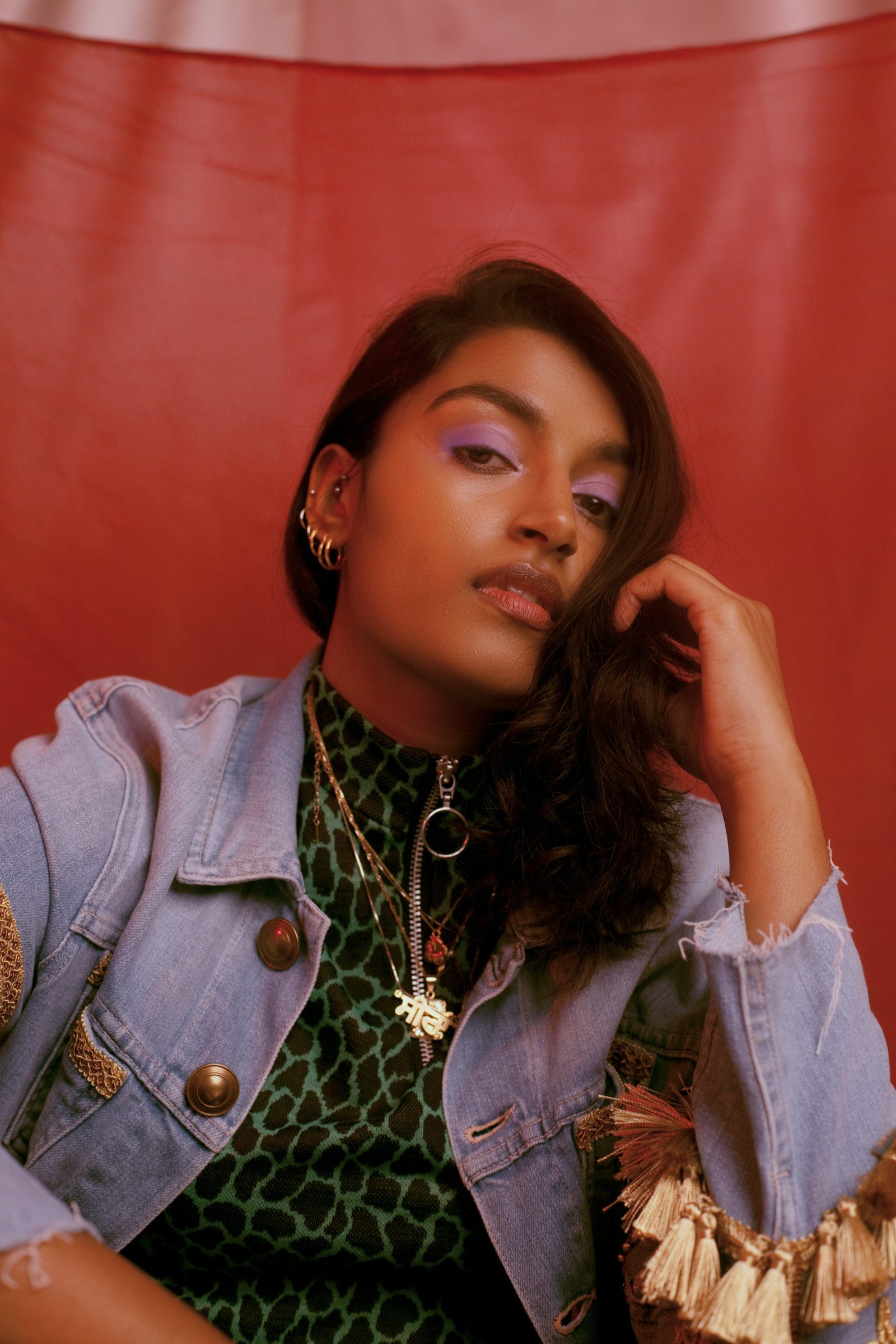
Karmi and I had unknowingly been fans of each other’s work before we even met. The time came around to work together and I remember her arriving at my studio: she entered with her soft speaking voice which to be honest completely surprised me. This gorgeous, ethereal, powerful looking woman comes through my door with this timid voice that I was not expecting at all. I guess there is this common prejudice or myth that beautiful women aren’t always pleasant to work with, especially in this industry, however this was definitely not the case with Karmi (and to be fair, luckily not the case with many of the models I work with). Anyhow, she’s a goddess personified with her long silky hair, big hazel eyes and voluptuous lips; sitting there ever so politely getting her hair and make up done. She unveils that she’s a student studying International History and that she wanted to finish studying before pursuing modelling full time. I was amazed that at only 21 she had her head screwed right on, often something that is hard to find these days.
So remember I mentioned her tiny voice? Well, it get’s more baffling when she belts out not so tiny ballads. The first time I heard her sing was a Mariah Carey cover that she sent me. I was blown away. This woman was not only smart and beautiful but her talents were endless. She mentioned how much she loved working with me and the feeling was definitely mutual, we were always able to create something spectacular. She brought this aura to the camera that really connected to the audience; it was captivating. I guess it’s safe to say she quickly became my muse.
M: Do you think the industry needs to define plus size model or should everyone have the same definition?
K: I think the term plus-size, straight-size or whatever you want to call models is outdated and limiting. Once you put a model in a category it instantly creates boundaries for her within the industry. There are so many beautiful and diverse models nowadays, keeping these models separate, to me, is counterintuitive.
M: Have you always been connected to your Asian roots?
K: I definitely didn’t resonate with my Asian side. Growing up, most of my friends were not Indian and I didn’t notice a strong influence of my heritage around me. As I have grown older however, I’ve definitely become more proud of who I am and where I come from. I was never ashamed of my roots, I simply just needed to become more aware of the beauty of my family and the cross over between two cultures that needed to be celebrated.
M: Did your mother or Asian family ever have a problem with modelling?
K: I think at first it was something that was not immediately understood. Luckily I have had a mum who has supported me no matter what I do, but even that can’t really push my family to understand fully what I have been doing. I think there’s always been a sense of pride in my family about my modelling, but I think the main concern was the impact it would have on my education. I think being able to make enough money to rely solely on modelling has made a big shift in the way my family view my job.
M: Where do you see yourself at 25?
K: 25 is not that far off!! In the next two years I definitely want to travel more, most specifically visit the Pacific as I’ve never been there. I’d also like to experience more with my family - go away and make more memories. It seems like we’ve all let life zoom past us for the past few years so I’d love to do more together.
You can find more of Karmi at @karmi_op
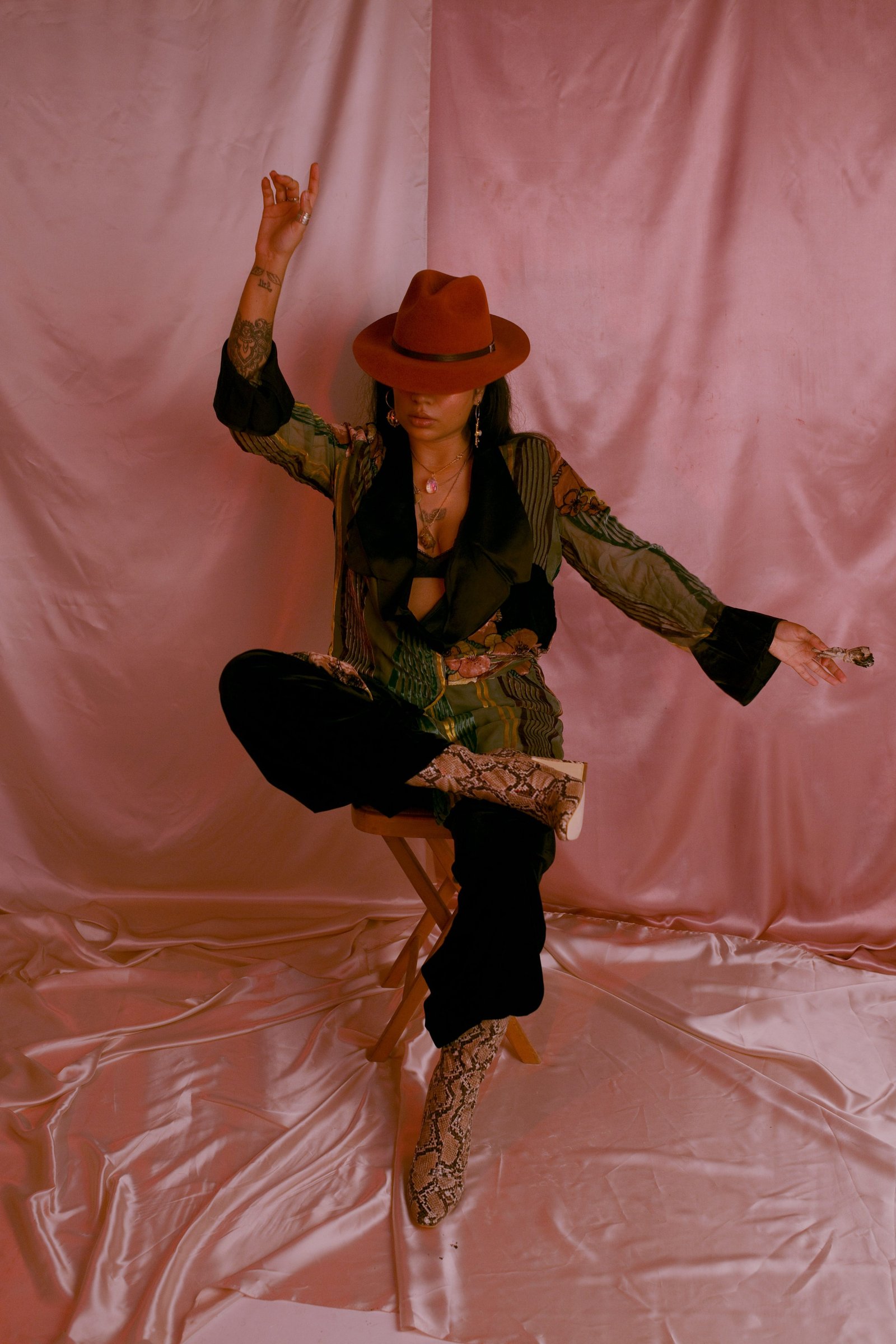
Karmi on Misha
Creative, innovative and bold are a few words that come to mind when you think of Misha Meghna and her work. Her colourful images celebrate all of her subjects in unique ways that demonstrate a perfect balance between the person in front of the lens and the talent behind it. However, her ability really shines through when she is capturing women. As someone who did one of my first ever creative shoots with Misha, I can say with confidence that she is one of a kind. Having always felt compelled to work with female photographers, I was inclined to shoot with Misha, but I was not expecting the friendship and countless collaborations that would form from a chance conversation on Instagram. From the first time I met with her, I was not only struck by her ideas and execution but her mind and the discussions that we had. Misha invited me into her studio and made me feel like I belonged. Her range is demonstrated by the diverse number of people she has captured and her evolution over the years as a photographer - these portraits are further testament to her already extensive portfolio. She is not only a talent to be nurtured and celebrated as a Londoner, but also a powerful female force to be admired within the Asian community. I am proud to call her my friend.
K: Have you always wanted to be a photographer? What do you love so much about being a photographer?
M: I don’t think I’ve always wanted to be a photographer, I wanted to be in the media. I studied media in high school and college and that’s what led me to study it at university. It was actually a change of path that I decided on when I was going into uni. I did a lot of psychology of cinema, world cinema, sound design and then I ended up taking contemporary art for a major which led me to do a lot more photography, but I was never taught photography. I just tried it out on my own. I guess just the idea of creating something that someone sees that they aesthetically find pleasing, or whatever it is, really made me happy. So, I think that is where my love for it came from. Being a female photographer, a lot of the time, gave me a bit more of a kick because there weren’t that many in London at the time, so it was nice to be sensitive and appreciated a lot more by models.
K: Has being Asian affected your world at home? How have your parents taken this in?
M: It’s natural for Asian parents to worry at first because it is so different to their lives, and I think that’s why a lot of the time Asian parents strongly dictate what they want their child to do. As any human being and a parent there is control, but as an Asian parent, you just want them to do things that the community knows. My parents never once doubted that I could [be a photographer], and they always pushed me to do things… but they were skeptical, especially about me being freelance. They wanted me to try and make it work and if not, look into something else. After being in the industry for a long time, I landed a big job and my mum could see that there was something better and bigger for me.
K: Has being Asian always influenced your work? If not, what has made you want to infuse your creations with your heritage?
M: I wouldn’t say that in the beginning I did, I was more interested in the Western world, my work was mainly based on geographical cultures, for example I loved the aesthetic of LA. I can definitely say that over the past 6 years, as I have accepted my roots more often, it has made me want to give more of my own culture to people. I remember when I never used to accept it, it used to just be something that had little relevance. I don’t want young girls today to feel like their culture is a shameful thing because it is not. I am glad there’s more positive imagery of us as it helps the younger generation a lot.
K: What has been a career highlight for you?
M: I feel like whenever anyone asks me about highlights or defining moments, it’s hard to say because with anything, I think that term suggests ‘all we need is one breakthrough moment’ but I don’t actually think this is as true as it sounds; so many people have different defining moments that shape your career. However, I will say that a memory that sticks out the most to me is shooting with Wu-Tang Clan. I was on stage with them. I’ve worked with many celebs, but it was something completely different being in their presence. Especially because they treated me with the utmost respect. I did that when I was 22, I was young, I had only just started in the industry and had been working towards it for 4 years, so it was surreal at the time.
K: Who do you look up to in the industry? Is there someone or something you are heavily inspired by?
M: As far as influences go, I feel like I am really inspired by things that I see in movies, TV shows and when I travel. A photographer I have always loved is Helmut Newton, I just like that he broke a lot of boundaries and made nudity look classy in a way that not a lot of photographers have been able to do - he is timeless. David LaChapelle is great as well, I definitely relate more to him in terms of aesthetics; I think his surrealism is what brought me into confidence to produce things that didn’t always have to look so real.
You can view more of Misha’s work on mishameghna.com and exclusive pieces at @mishameghna
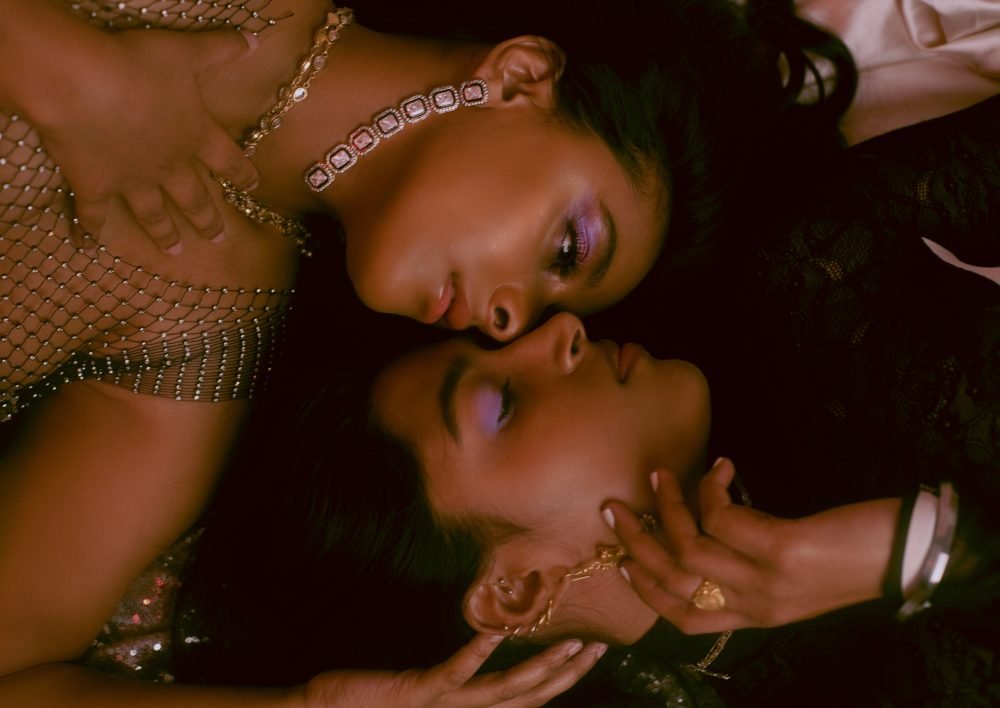
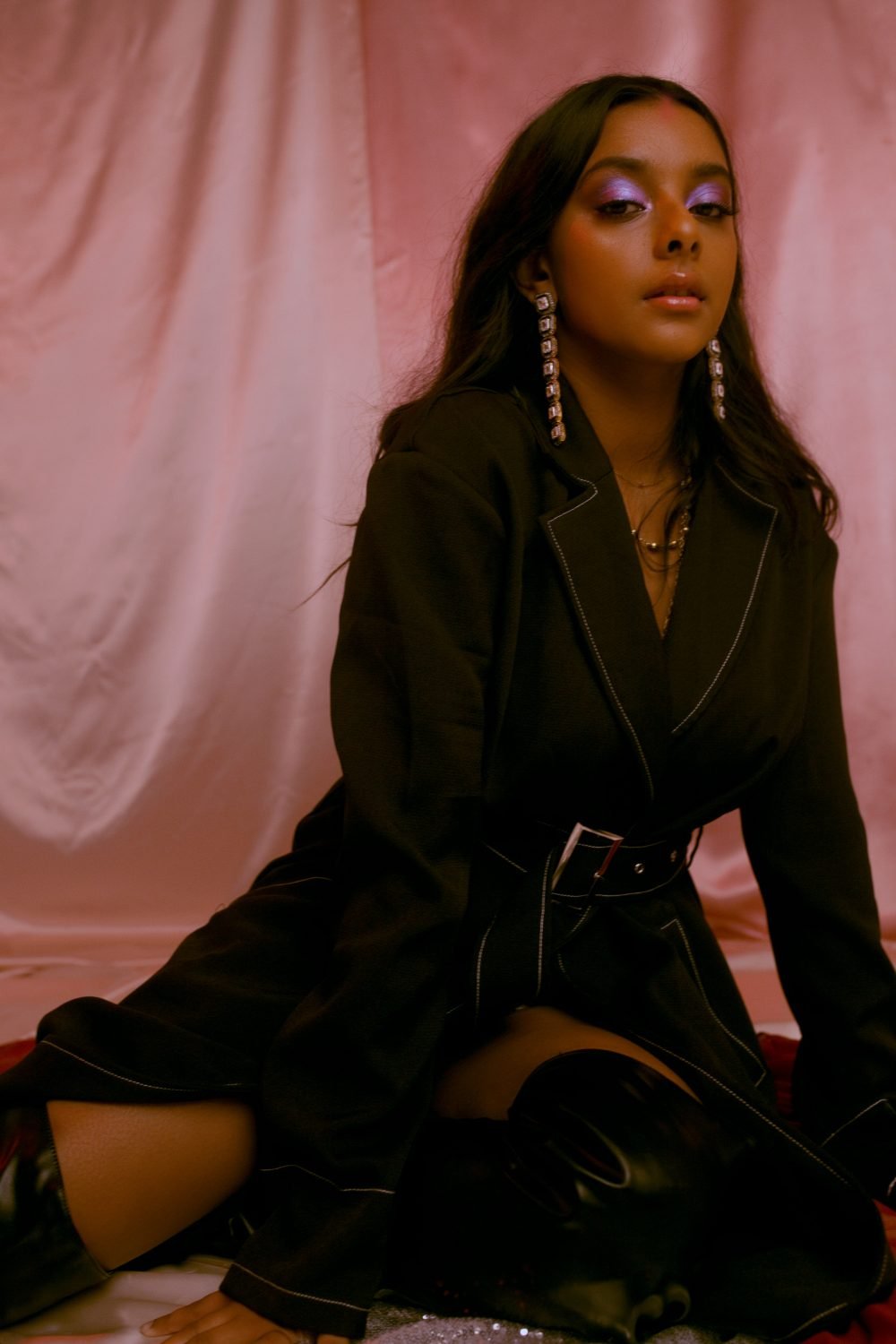
Farzana on Jasmin
Jasmin Kaur Sehra, also known as Paradise Girl online, is an artist in the UK who paints the world around her. Growing up in London, she was constantly surrounded by the arts, be it family members or musicians, but also the artists she looked up to. Pursuing art as a career was inevitable. She is presently collaborating with LDN WMN TATE & The Mayor of London to exhibit her artwork featuring Mala Sen, and is currently presented in the streets of East London, on Brick-lane.
I was lucky enough to speak to her about her work and her journey throughout her career. I came across Jasmin Kaur Sehra in the past, most notably when she created her ‘Bollywood Series’ - the Bollywood-style graphics immediately caught my attention. Each piece is inspired by a particular song or album by the individual musicians and pinpoints an element of each person with a portrait. She continues to create work that captivates your eye, and after seeing her work up close for the first time in the streets of Brick Lane, I couldn’t help but feel proud.
The bright colours and bold graphics she paints, truly reflects her love for the late ‘80s and early ‘90s. Speaking to her about her inspiration, she showed me images of her parents in Mexico and explained how these images became the catalyst that drove her focus in a new direction. Listening to her speak about her work, the passion in her words reminded me precisely of the reasons why I have Instagram-stalked her and her work for such a long time. Her Bollywood series appears to speak to me the most. I am fascinated by how she was able to combine popular music culture from this era - artists that I also admire – with a confined space. A space I immediately identified, given that I saw these elements growing up in an Asian household: old Bollywood movie posters and ‘80s cassette cover tapes my parents owned. As we continued to talk, she spoke of her inspirations such as music artists, her family and what drives her to create. She began speaking about tribesmen, in particular, the Maasai tribe. She began to speak about their traditional dress, their beadwork, body painting rituals and how their work embodies their rich history from the past.
I was curious to also ask her if, being an Asian woman in the UK, her parents reacted well to what she is currently doing and whether they are supportive of what she is trying to create. She tells me that she is one of the lucky ones, with the support of her lovely parents. Her twin brother {bet you didn’t know this} is also constantly pushing her. So she is able to work freely without the pressures of the Asian community on her back. As a graphic designer myself, I really identify with Jasmin. As we went to the same university and studied the same subject, I asked her how she was able to improve, how she was able to find her niche. Something really resonated in her response: ‘I can only let things flow naturally. Everything is a process, as soon as you let go work at your own pace it will happen - I’m always learning myself’.
You can find more of Jasmin and her work over on
jasminsehra.com or @jasminsehra – she’s a bad bitch, I’m glad to know her.
Jasmin on Farzana
When art meets design, and the by product meets makeup: Farzana Ahmed, also known as Text Book Beauty, balances this magical trio perfectly with her work. Farzana’s makeup style is clean, edgy and unapologetic. She thrives on championing skincare, natural makeup looks and funky graphic eye makeup, all while inspiring us to embrace our imperfections.
I have to be honest: I’ve always searched for someone I can relate to in the makeup world, and it is hard to come by, especially if you’re brown, even more so if you’re a dark skinned South Asian - you don’t see us enough - if at all - in the mainstream. But the online beauty community certainly has its advantages, and I’ve come across numerous brown girls killing it. So when I discovered Farzana, I instantly connected with her style and ethics. I caught up with Farzana to get to know more about Text Book Beauty.
J: Tell us a bit about yourself and your journey with makeup. What and who inspired you to pursue makeup?
F: I am a graphic designer, beauty enthusiast, self-titled face doodler and a multipurpose queen from South East London. My passion for makeup began at a very young age, the youngest of 4, I would sit and examine my sisters as they applied their makeup when they went out - I was never allowed to touch (but I always did). Throughout my education experience, art and design were my favourite subjects. I found them extremely enjoyable and therapeutic. My relationship with my beauty regime and my passion for design helped me to pursue makeup today. I began blogging in 2011/2012, way before being a ‘blogger’ or ‘influencer’ was even a thing! It became a platform outside my school experience, outside my family life. It helped me to lay down all my thoughts, things I adored and of course my love for makeup. Back then there weren’t many YouTubers, bloggers, that looked like me, I found it very difficult to identify with these women online - this was a starting engine of what pushed me into creating a blog, however I first began covering my face, I felt very self-conscious as I felt like I didn’t look like these women online, and then eventually I stopped and thought: ‘Fuck it. It’s not that deep, do whatever you want Farzana’ - and so I started to create my own style of makeup, which has evolved into a very colourful, painterly, gloss lover style.
J: The online beauty community has grown immensely, how has social media impacted your craft?
F: My attitude to makeup has dramatically changed throughout the growth of social media. I initially felt as if I had to fit in this perfect bubble online - until I realised how unachievable it was to be this ‘Instagram girl online’ and so I stopped caring and thought ‘fuck it’. We live in a day and age where a lot of us are consumed by social media, a lot of the content that we take in either can have a negative undertone, and anything we upload can be heavily scrutinised by people that may or may not enjoy your content and that’s ok. Perfection online is no longer the ideal and it’s quite liberating and I think people are finally catching up with it. It all washes off at the end of the day it’s not that much of a big deal.
J: I love your bold designs, what inspires your makeup looks?
F: I create looks from concepts, drawings, events and personal experiences and of course whatever I enjoy at the time. Textures, shapes, multipurpose products and most importantly for me: colour. Also my love for photography and beauty photography really push my passion for creating looks. Makeup is supposed to be fun, light-hearted and allow you to step out of your comfort zone.
You can find more of Farzana over at @textbookbeauty