
1920s Men’s Fashion: 7 Rules That Still Shape How We Dress
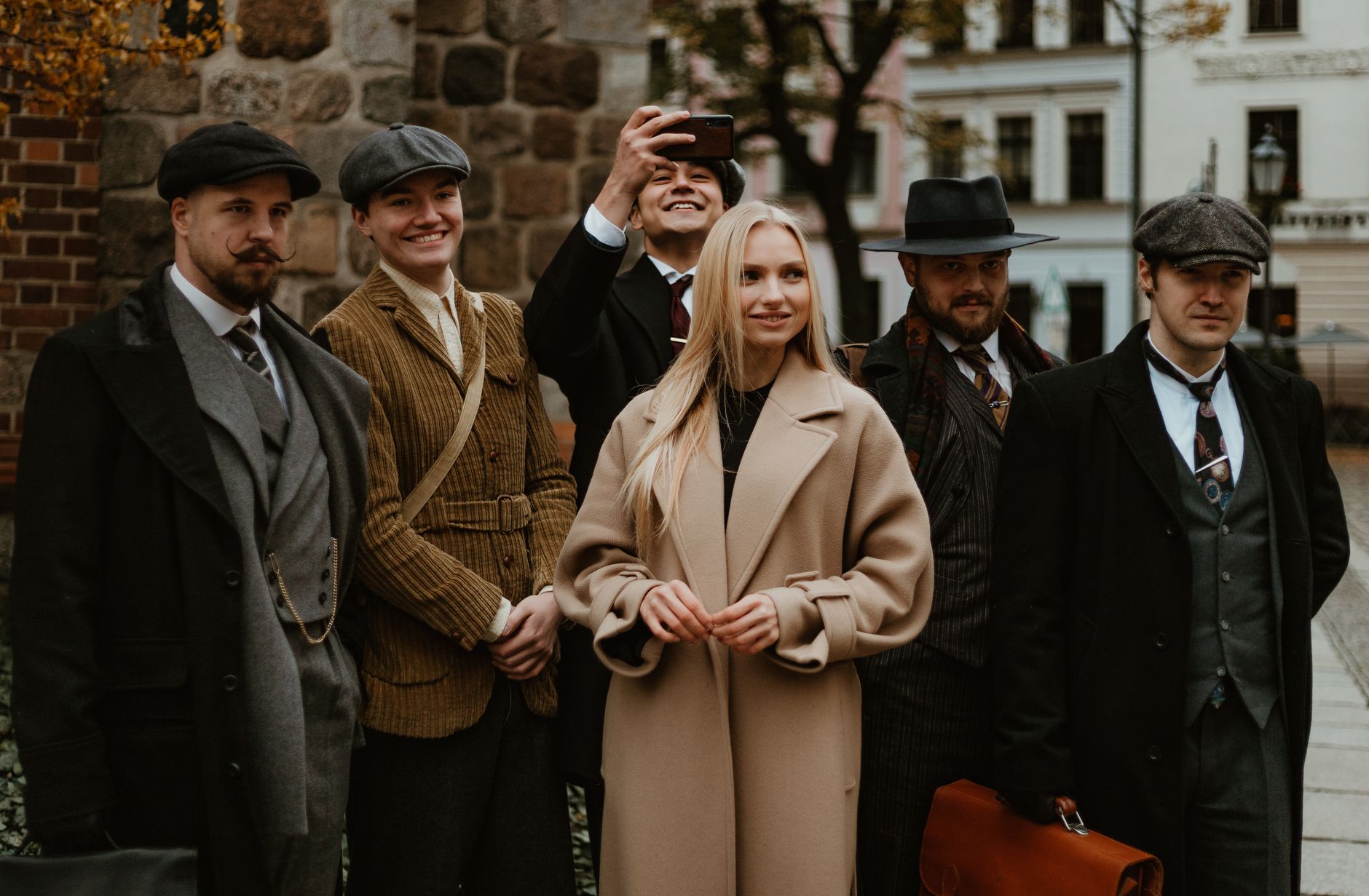
The biggest misconception about 1920’s men’s fashion is that it was one look — pinstripes, fedora, Tommy gun optional. In reality, the decade fractured male dress into at least five distinct tribes: the suited businessman, the college dandy, the sporting gentleman, the Hollywood aspirant, and yes, the gangster. Each dressed almost nothing like the others. Understanding that split is the only way to make sense of why so many modern wardrobe staples trace straight back to 1920–1929.
The decade also marked the first time American popular culture — not European aristocracy — genuinely drove men’s style. Advertising, cinema, and Prohibition-era nightlife created a feedback loop that moved faster than fashion had ever moved before. Trends that would have taken a generation to trickle down now reached millions of men inside a single year.
Why the 1920s Were the Last Decade Men Dressed to Shock
Before 1920, men’s fashion changed in inches. A lapel widened half an inch; a trouser broke slightly lower. The 1920s blew that up. Oxford bags — wide-leg trousers originally worn by Oxford University students — reached an extraordinary 40-inch circumference at the knee by mid-decade. That’s roughly the width of a modern beach towel folded once. Wearing them in public was a statement, not an accident.
The energy came directly from social upheaval. Prohibition handed young men a reason to gather in illegal spaces where normal dress codes didn’t apply. Jazz clubs, speakeasies, and college dances rewarded flamboyance. For the first time, dressing to attract attention wasn’t considered unmasculine. That shift has never fully reversed.
The Suit Gets a Demotion — and a Makeover
By 1925, the lounge suit had replaced the frock coat as the default business dress in American cities. That sounds minor. It wasn’t. The frock coat required a certain posture, a certain pace of life — the lounge suit let men sit at desks, ride streetcars, and move fast. It was the first truly modern business garment.
The silhouette changed too. Shoulders were natural, waists suppressed only slightly, trousers sitting higher with a generous break. Single-breasted two-button jackets dominated, though double-breasted styles — wider lapels, six buttons — signaled ambition and swagger. The suit didn’t disappear. It just stopped being ceremonial.
From Spats to Oxford Bags: The Street-Level Looks That Defined the Era
Spats — cloth or leather ankle covers worn over shoes — peaked between 1920 and 1928 before vanishing almost overnight. White spats with black Oxfords were the clean-cut gentleman’s finishing touch. Gray or fawn spats were the subtler choice. Then the decade ended, trouser hems dropped slightly, and spats looked suddenly absurd. Few accessories have had a sharper expiration date.
Oxford bags ran the opposite trajectory. The wider, the better, the louder. They started as a workaround — Oxford University had banned plus-fours on campus, so students wore bags over their knickerbockers to get around the rule. The street eventually adopted them as pure fashion, completely divorced from that original rebellion. And once the streets had them, there was no putting them back.
What Gangsters, Flappers’ Dates, and College Boys Actually Wore
Real gangster style leaned heavily pinstriped. Wide chalk-stripe suits in charcoal or navy, high-waisted trousers with suspenders, a snap-brim fedora or homburg. The look was about telegraphing new money fast. Dress like wealth, and people treat you like wealth — a logic that still operates on every red carpet.
College men wore raccoon fur coats to football games. And those coats were genuinely expensive — top-quality raccoon fur ran up to $600 in 1920s dollars, roughly $10,000 today. Wearing one said you, or your father, could afford to be frivolous. That conspicuous leisure was the whole point.
Sports and Leisure Cracked Open an Entirely New Male Wardrobe
Two specific items changed casual dressing permanently.
The Prince of Wales wore a Fair Isle sweater at St. Andrews golf course in 1921, and the patterned knit went from obscure Scottish craft to international status symbol within two years. Golf retailers couldn’t stock them fast enough. On the course itself, plus-fours — knickerbockers cut four inches below the knee — became the standard golf trouser by 1922, allowing a full swing without binding. Paired with argyle socks and two-tone shoes, it was the decade’s most complete leisure outfit. Modern golf trousers still borrow the relaxed, wide cut that plus-fours established.
Hollywood and Advertising Told Men What to Want — and They Listened
The Arrow Collar Man — a fictional advertising model created for the Arrow shirt company — reached an estimated 400 million readers through magazine ads during the 1920s. He received more fan mail than any real Hollywood actor. That number matters because it shows how completely advertising had replaced the tailor’s shop as the primary source of style information for ordinary men.
Hollywood amplified everything. Douglas Fairbanks and Rudolph Valentino wore suits onscreen that were immediately copied by men who’d never been inside a proper tailor. Style was now something you watched, then bought off a rack. So the feedback loop tightened — screen, ad, store shelf, street — and 1920’s men’s fashion accelerated in a way the previous century simply hadn’t allowed.
The 1920s Pieces Still Hiding in Modern Men’s Closets
1920’s men’s fashion left permanent marks that most men wear without knowing it. The single-breasted two-button suit? 1920s. Argyle socks? Direct descendants of Fair Isle knitwear. Wide-leg trousers cycling back every few years? Oxford bags, just renamed. Even the modern polo shirt owes a significant debt to the decade’s push toward less structured separates.
The real legacy isn’t the pinstripe or the fedora — it’s the idea that a man’s clothes could say something deliberate about who he was. Aspirational, rebellious, athletic, sleek. That idea arrived in the 1920s. But honestly, it’s never left.
Frequently Asked Questions
What did men wear in the 1920s?
Men wore lounge suits for business (standard by 1925), Oxford bags or plus-fours for leisure, Fair Isle sweaters for sport, and raccoon fur coats for conspicuous occasions. Dress varied sharply by class, region, and context — there was no single uniform.
What was 1920s men’s fashion gangster style?
Gangster style centered on wide chalk-stripe or pinstripe suits, high-waisted trousers held up by suspenders, white dress shirts with stiff collars, and either a fedora or homburg hat. The silhouette was broad-shouldered and deliberate — designed to project authority in rooms where legal authority no longer applied.
How do you dress like a 1920s gentleman?
Start with a high-waisted two-button suit in charcoal or navy, add a white or pale blue shirt with a stiff collar, and finish with leather Oxfords — brogues or cap-toes both work. A flat cap or homburg completes a period-accurate look without crossing into costume territory. Keep accessories minimal: a pocket square, a simple tie bar, and you’re there.
For more pieces like this one, browse the rest of our Fashion coverage.