
The Impact of Dust and Debris on Cooling & Heating System Performance in Dry Regions
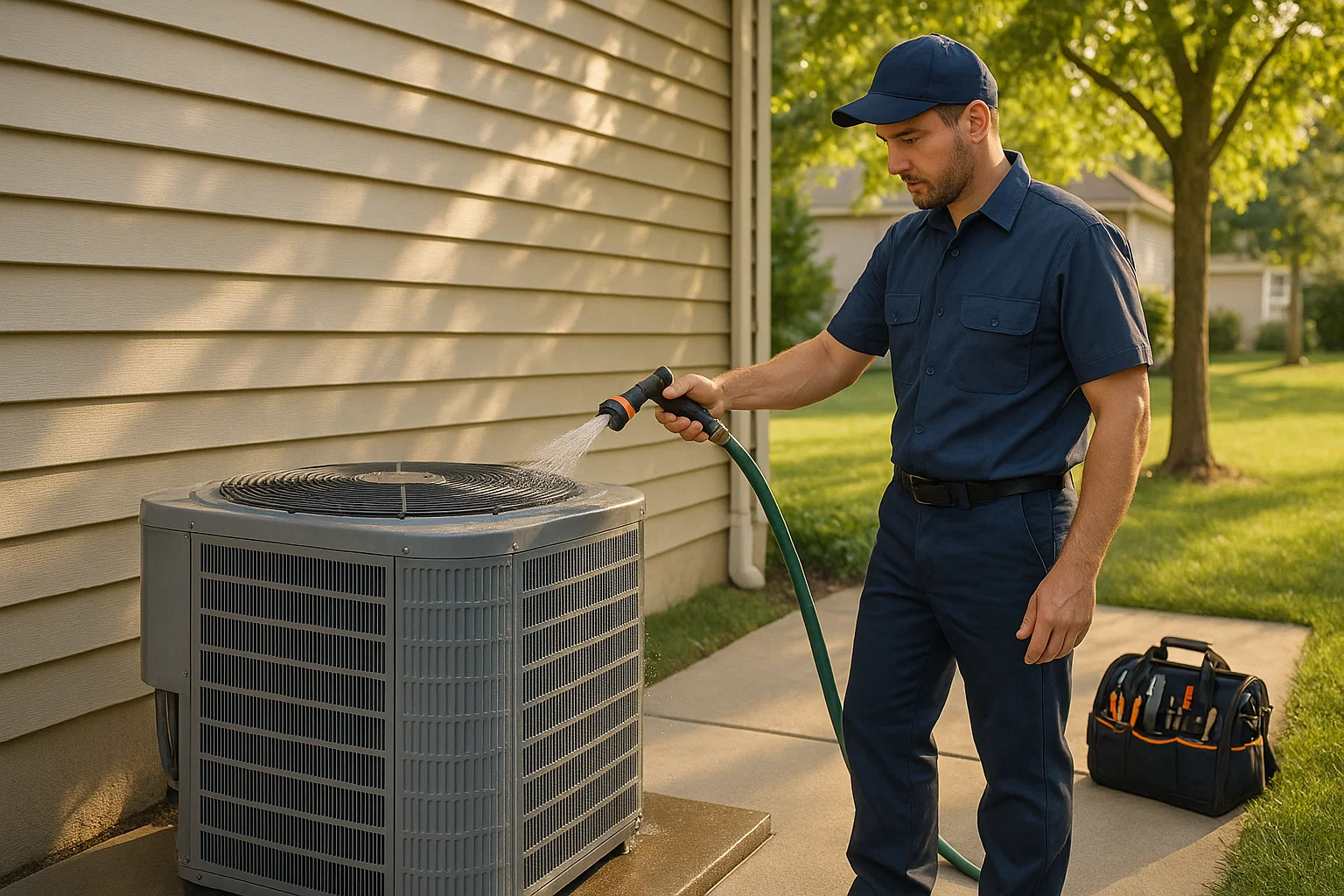
Dust and debris are also the stable environmental attributes of dry-and semi-arid regions and both have significant impacts on the long-term functioning of cooling and heating systems. These particles are frequently blown away by the wind and are deposited on the outdoor and indoor system components, slowly impacting the airflow, heat transfer, and mechanical movement. They build up in ducts, coils, and filters to inhibit good system functioning and comfort inside. In the long run, this results in increased energy use and rate of performance disruption. The knowledge of the interaction of dust with system elements can be used to identify the reason behind the importance of regular maintenance and environmental consciousness in such climates.
Dust Challenges in Dry Climates Overview
1. Dust Infiltration Into Air Systems
In dry areas, dust suspended in the air is a constant occurrence because loose soil, sparse vegetation cover, and frequent winds cause the presence of dust in the air. These small particles find it easy to penetrate the ventilation orifices and accumulate within the air conditioning and heating systems. It enters the building and dust starts to settle on the internal parts like evaporator coils, blower fans as well as the duct surface. This accumulation inhibits unrestricted movement of air and the capacity of the system to effectively move conditioned air. As time goes by, the build-up becomes thicker and forms harder to clean without going through a rigorous cleaning process.
This causes imbalanced distribution of temperatures in the indoor areas. The issue does not just lie in being exposed to the outside world but even in closed in indoor environments there is the problem of being exposed to the outside world but even in closed in indoor environments there are the problem of exposure to the outside world as well as the problem of infiltration.
2. Filter Strain and Airflow Restriction
The first line of defense against dust and debris intrusion into heating and cooling systems is their air filters. In arid conditions, these filters are more easily clogged as even the concentration of airborne particles is very high. Blocking the filters results in less airflow and the system has to work harder to force air through narrow openings. This additional pressure may lead to a reduced overall performance, and reduced life of equipment. It would be necessary to regularly replace and/or clean filters as part of keeping systems balanced.
In many residential and commercial setups, users underestimate how quickly filters degrade under dusty conditions. J & M Cooling & Heating has often observed that neglected filter maintenance directly contributes to reduced cooling efficiency and inconsistent heating output in such environments. As airflow weakens, rooms take longer to reach desired temperatures, leading to discomfort and increased operational demand on the system.
3. Heat Exchange Efficiency Decline
Heat exchangers are important elements that facilitate heat transfer between indoor and outdoor settings. By coating these surfaces with dust, an insulating layer is formed and disrupts thermal transfer. This compromises the capacity of the system to receive or give out heat, according to the mode of operation. In cooling systems the evaporators coil finds it hard to absorb the heat indoors whilst in heating system the condenser coil finds it hard to release the heat efficiently indoors.
This ineffectiveness results in longer working cycles and low precision in control of temperature. In arid areas where dust concentrations are constantly elevated, this problem only becomes increasingly evident with time. Layers of debris, even small ones, can drastically change thermal performance, so routine inspection and cleaning of the system are necessary to ensure that heat transfer between system components remains steady.
4. Mechanical Wear and System Stress
Dust and debris do not only influence airflow and heat transfer, but also provide mechanical wear in cooling and heating. Especially delicate are moving parts including motors, fans and bearings, when fine particles penetrate their points of lubrication or areas of friction. The build up of dust results in more resisting forces that result in components working even harder than they should. This strain in a very short time contributes to the damage and disintegration of equipment that can result in unforeseen malfunctions. In arid climates, due to the consistent occurrence of airborne particles, internal parts of devices will rarely be kept in a clean state over extended periods.
With time, this causes the problem of vibration, the development of noise, and the decreased smoothness of its operation. The long-term impact is that the reliability of the systems will decrease and the number of mechanical servicing and part replacement will increase.
5. Energy Consumption Increase Patterns
Once dust limits air flow and lowers the ability to transfer heat, cooling and heating systems will need to use more energy to get desired indoor temperatures. This is because the system will be able to offset the decreased performance by increasing the length of the cycles and running at higher output levels. This is enhanced in dry areas as it is constantly exposed to dust particles. Increases in energy bills are often not immediately noticed by users, that efficiency of the systems is falling. This loss of hidden energy with time can be a major factor of cost to households and businesses. Also, the systems in use within the environment with strain related to dust have a higher tendency to cycle and this also contributes to the increased use of electricity.
This inefficiency loop shows the significance of maintaining the internal parts clean and also keeping airflow channels unclogged during the system operation.
6. Maintenance Challenges in Dry Environments
Service and upkeep of cooling/heating systems in dry areas is always a challenge considering the permanent presence of dust and debris. This necessitates regular cleaning so as to ensure that systems remain completely clean over extended periods of time, but this is not always practicable to ensure a system is kept fully clean over long periods of time due to environmental conditions. The outdoor units are particularly susceptible, being in direct contact with the particles carried by the wind. The indoor elements should also be paid attention as the dust might be dispersed over the ventilation systems and may be situated in inaccessible places. Compared to systems in less dusty set-ups, the maintenance schedules will require more frequency.
Technicians will often discover that over time, when neglected, more serious problems will occur such as loss of cooling capacity and heating inconsistency. Regular maintenance can maintain the system efficiency and lowers the chances of significant operating disturbances due to piled up rubble.
Dust and debris contribute significantly to the functioning of cooling and heating systems in dry areas. They have a long term impact on airflow, heat exchange, mechanical stability, and energy consumption that often results in gradual but significant loss of performance. With time, these particles will be deposited in critical parts of the system and as such, regular maintenance is no longer an option, but rather a must. The systems that are in such environments should be monitored closely to ensure that efficiency and reliability are maintained. The effect of dust strain, unless well cared about, will reduce the lifetime of equipment and raise operation costs.