
What Makes Immersive Exhibitions Different From Traditional Galleries
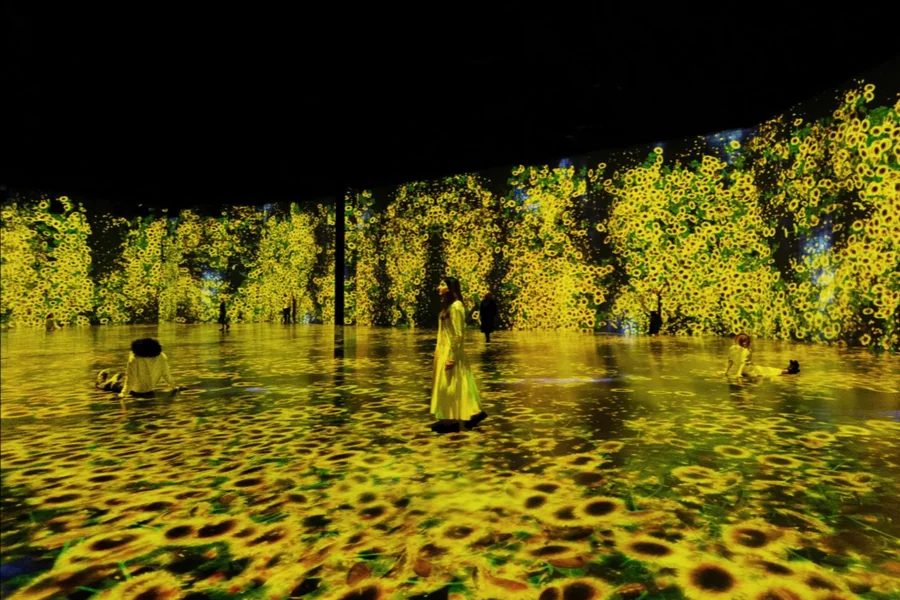
The interactive characteristics of interactive art installations enable visitors to experience complete artistic immersion through their body-based access to the artwork. People who experience immersive art are treated as active participants, while traditional galleries show art to exhibit visitors from a distance. The visual components of immersive artworks show their artistic value, which distinguishes them from conventional artistic expressions.
Sensory Engagement Beyond Visual Limits
Exhibition spaces achieve their immersive atmosphere through their sensory equipment, which produces an experience distinct from other exhibition types. Museums use effects to get people to come and visit. They also keep it quiet so people can really think about the art. The artwork installation has a lot of things like sound and light and smells and things you can touch. This helps people feel like they are really there and understand the artwork in their way. Museums use all these things to make people feel something. When people hear and see and smell things all at the time it makes the artwork feel more real, to them. Museums do this because the artwork can affect people in a way when they use all their senses to experience the artwork. People use their surroundings to experience art because they treat art as part of their personal existence.
Interactive Experiences That Respond to Visitors
Immersive art is really different from what you see in an art gallery. With art you are not just standing there looking at things. You can actually walk around. Be a part of it. You can touch things. Use technology to change what is happening. This is a deal in cities like Miami, where people are really into immersive art. Immersive art has become very popular in areas, like Miami. In this context, creative spaces such as the popular Superblue are often referenced for their ability to merge participation with artistic expression. When you walk into a room with this artwork it does not stay the same. The artwork changes because of the visitors. They make the artwork different each time they see it. This means that everyone who visits has an experience with the artwork. It is like the visitors are helping to create the artwork. The visitors and the artist are not separate anymore. The visitors are like artists too because they are changing the artwork in time. The artwork and the visitors are connected in a way.
Advanced Technology as a Creative Medium
Technology helps to tell apart immersive exhibitions from galleries. Traditional galleries show artworks. Immersive exhibitions use projection mapping, augmented reality and motion capture. These digital installations are key. Technology lets artists create worlds that’re hard to make with just physical materials. Walls and floors become interactive. Ceilings can look like moving skies. This helps artists tell changing stories. Exhibitions feel more alive with technology. They are not just displays. They are like living systems. Design and real-time interaction shape them. Technology makes immersive exhibitions special. It gives artists chances to share their ideas in new ways.
Spatial Design That Tells a Story
People experience immersive spaces through their designed environments, which create their entire experience. Classical gallery spaces tend to be designed using neutral designs aimed at maximizing visuality and conserving the artwork. The immersive exhibition uses the space itself as a component of the narrative experience. The room designs are made to help one area turn into another area by changing the feeling of the size and how strong it’s. The way they use light in the room, the way the room is built and the sounds they use in the room all come together to tell a story about the room. This story about the room is not about showing you things in the room. It is about taking you on a journey through the room. When you walk through the room you do not just see one thing in the room. Then another thing in the room. The room has areas that are all connected like the pages in a book about the room. The room designs make you feel like you are reading a story about the room. This story about the room has chapters and each area in the room is like a chapter in the story about the room. The room designs and the things in the room all work together to create an experience.
Audience Participation and Digital Shareability
Exhibitions in an immersive environment are unique in their approach towards engaging visitors, beyond the physical participation in the event. The use of social media becomes an inherent part of the experience through the creation of visually stunning settings meant for taking pictures. In effect, such exhibits become a cultural event wherein participation extends outside the physical space in which they take place. When people go to see the artwork the artwork is very lucky to have them. The people who visit the artwork are really important, for the artwork. They help the artwork by telling people about the artwork. The people who visit the artwork take pictures of the artwork. They record video clips of the artwork. This helps get the word out about the artwork. Then sharing them. This means that the visitors are actually helping to spread the artwork. The visitors are a part of the artwork distribution process, which is the process of getting the artwork seen by more people. Visitors play a role in the promotion of the artwork.
Evolving Curation and Expanded Accessibility
Curation within immersive exhibitions differs greatly from those traditionally followed. The process of curation has shifted from its traditional focus on objects to its current purpose of developing spaces that promote experiential learning instead of traditional classification methods. The exhibition format enables broader audience access because it allows entry to people who typically avoid visiting art galleries. The installations provide clearer explanations, which decrease the need for technical art language. The exhibition format creates multiple opportunities for visitors to return because the exhibit demonstrates different aspects with each visit. The developing exhibition structure demonstrates how artistic presentation methods are becoming more open to various experimental forms.
The experience of immersive exhibitions is a major change in the way that art is created by artists and experienced by audiences. Immersive exhibition visitors will engage with works of art through greater use of the senses and interactive elements. These include technology-based components of immersive experience, narrative structures that are spatially defined, digitally mediated experiences, and methods of curating. Immersive environments provide an opportunity to engage with art through direct physical contact, while traditional galleries typically display works of art in a manner that allows viewers only to see them from a distance. Contemporary expressions of cultural space are evolving today and open up new avenues for the expression of contemporary art.