
The Sticker as Statement: How Custom Sticker Printing Found Its Place in Creative Culture
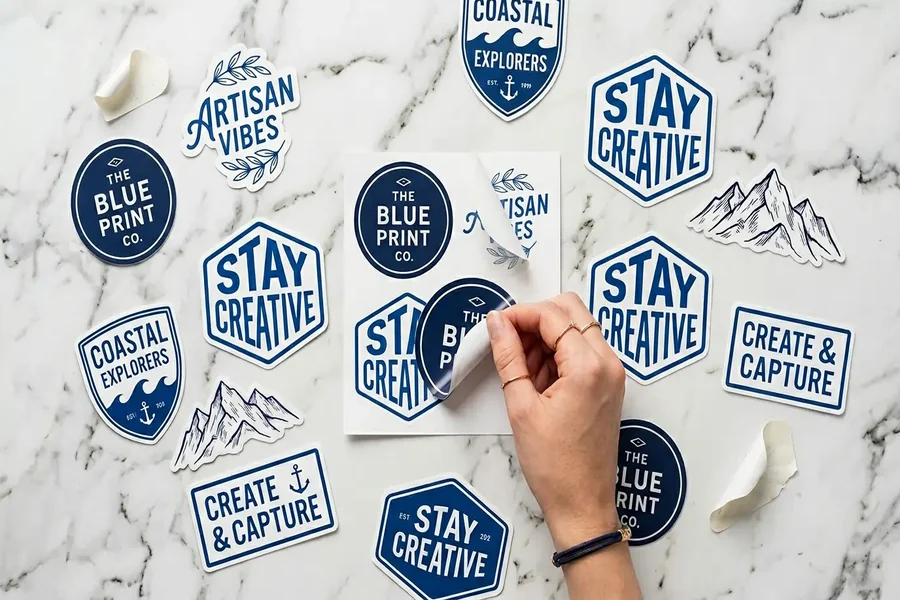
Open the door of any coffee shop filled with people working on laptops and you will see them. Stickers on sleeves, lids, and water bottles. A band logo partly ripped off of something beloved. A strange tiny frog wearing sunglasses on the back of somebody’s laptop. Someone’s mutual help network. Little internet shop of someone. The visual buzz is relentless, and once you start to see it, you can’t truly stop.
The Birth of the Sticker
Stickers have been doing this for decades, just more quietly than most people give them credit for. The modern sticky sticker came about in the 1940s, when surplus paper and fluorescent inks from the war started showing up in screen-printing firms.
By the 1970s, vinyl had taken over, and punk kids and skaters and political organisers were already using stickers to do what stickers do best: make a statement without saying anything out loud.
The Smithsonian’s National Museum of American History’s holdings of bumper stickers and political ephemera across decades of American social movements tell their own story.
What’s remarkable is how that tendency has moved into smaller, weirder, more personal spaces.
A few decades ago, if you wanted stickers created, you needed:
- A screen printer
- A rather steep minimum order
- A substantial amount of cash up front
Now, custom sticker printing sits inside the same toolkit that a freelance illustrator or a corner bakery already uses for business cards and social posts.
With digital printing and custom die-cuts, it’s easier for designers to explore without committing to enormous inventory.
The threshold for putting things out into the world has been lowered.
You can order fifty stickers of a design you did on your couch on a Sunday night, and they’ll be at your door by the end of the week.
What Small Creators Are Doing With Them
That access has transformed small creative culture.
Bands
Bands print their own stuff instead of waiting on labels.
Independent Zinemakers
All independent zinemakers include stickers with every order.
Tattoo Artists
The tattoo artists put out flash sheets with a sticker inserted in for the ones who don’t book.
Small Businesses
They are included in the packaging by small skincare companies, as consumers used to drop in a free pen.
It’s branding, of course. But it’s also a bit short on branding.
A sticker says, here I am, take one if you like.
The Growing Role of Sticker Design
Editorial design, fashion, and product packaging all use custom sticker printing and decals in ways that would have seemed cheap a generation ago. Now many independent periodicals provide them as a subscriber incentive. Streetwear drops use them as a precursor to a wider campaign. The line between commercial collateral and little art pieces continues to blur, most of the time for the better.
What Counts When You Order
Once you start ordering stickers, you’ll discover there are a few decisions that matter more than most people think.
Material Choices
The longevity depends on:
- Vinyl versus paper
- Die-cut vs. kiss-cut
- Single sticker or multi-design sheet
These choices make a difference in how the borders and backing will read, and how the sticker will really be used.
Finish Matters
Matte and shine look different in mock-ups than they do in real life.
Bands and skate brands choose to go vinyl with a die cut for longevity.
Small product labels and wedding favours generally function nicely on paper because they’re not designed to last outdoors for years anyhow.
Colour and Printing Accuracy
Colour is a discourse itself. Most printers are OK with CMYK but bright greens and very saturated tones might still be very different from screen previews to final prints.
Accuracy depends on:
- The substrate
- Colour profile
- Calibration of the printer
If it’s a worthwhile project, it’s rarely a terrible call to provide a physical proof for a small initial run.
The Rise of Experimental Sticker Formats
Then there’s a quieter turn about removable adhesives and material experiments.
Popular experiments include:
- Wall decals that peel off without residue
- Clear vinyl
- Holographic coatings
- Recycled feel paper stocks
It’s nothing new, but the cost of testing has come down enough that small creators can genuinely experiment with formats that once were out of reach.
Such versatility is part of the reason why bespoke stickers don’t become nostalgic relics but keep attracting new audiences.
Why Format is More Important Than You Think
Stickers have a cultural weight that is bigger than the medium. Bumper stickers have long been used as symbols of identity and political affinity, and AAA has a historical piece on how they expanded across tourist sites and political campaigns during the mid-last century.
Today, laptop stickers do the same in workplace and academic contexts. Self-expression in a public form that asks very little in return: stickers. You’re stating something, but you don’t have to defend it like you would in a conversation. The sticker does all the talking.
Stickers as Personal Expression
However, what is underappreciated about custom stickers is the flexibility of it as a creative expression. There’s a poet I follow online who prints a new sticker with a single line of her own writing on it every month and sells them in packs of five.
My friend’s mum has a homemade jam company and has just moved from plain rectangular labels to a hand-drawn fruit pattern that she designed on a computer drawing program. Neither of those are marketing strategies in any traditional sense. They are more like tiny acts of self-portraiture, work that also happens to do the function of teaching people what something is.
Small, Stubborn. Still Standing
So the format continues popping up in unexpected places.
Examples include:
- Local mutual aid groups make sticker packets to subsidise grocery delivery
- Open mic nights pass out flyers instead
- Some therapy practices are now including them in welcome packs
- University departments are joining the trend with academic joke stickers
The medium works practically anywhere, because it doesn’t demand much.
A level surface and a few seconds of your attention.
Why Stickers Continue to Matter
And there’s something strange about how long-lived that little middle has been. The internet isn’t killing the sticker.
If anything, the rise of independent creators selling direct to fans has made the format more important than ever. What you might have pinned on a mood board online a decade ago is also a sticker someone can send you for a few dollars.
The connection between digital and physical is tighter than it’s ever been, and stickers are smack in the heart of that loop doing what they’ve always done.
Final Thoughts
If there is a lesson here, it is that stickers do not fall easily into any one category. They’re art and they’re branding. They are utilitarian and they are attractive. They are personal, and they are public.
The best ones take all of it in at once. A little marker of an idea or a person or a project, stuck somewhere someone else will notice it. That’s what you’re looking at when you stroll past a laptop in a coffee shop with five layers of sticker history on it. A complete modest interchange of ideas, one square inch at a time.