
The Timeless Appeal of the Ballerina Music Box: Why This Classic Keepsake Is Making a Modern Comeback
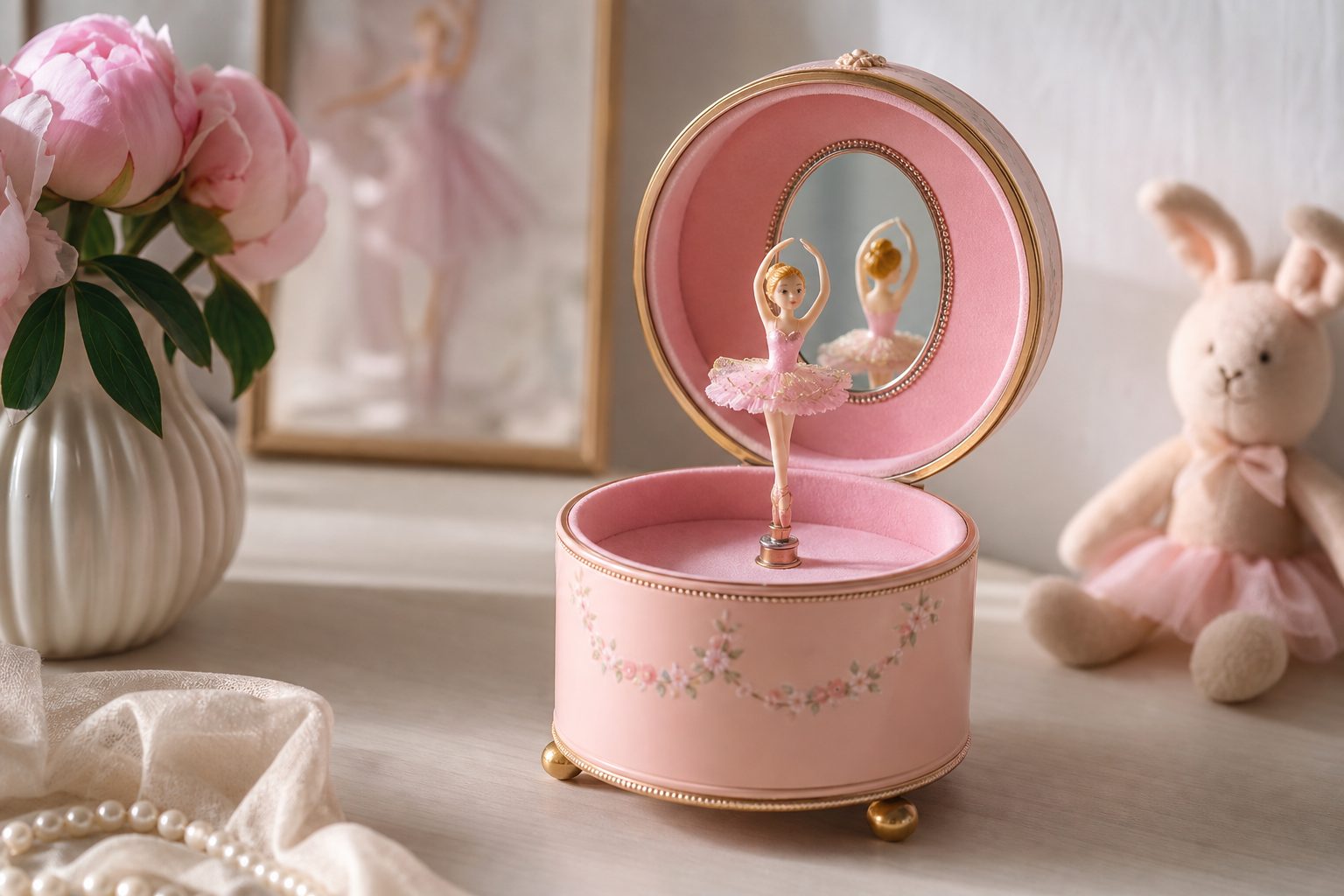
Picture the moment: you lift the lid, the tiny dancer rises, and a looping melody fills the room. It is a half-remembered image for many of us, and yet oddly hard to shake. The ballerina music box is quietly making a comeback, not because of nostalgia alone, but because it answers something very current: a longing for objects that are beautiful, tactile, and genuinely personal in a world of endless digital distraction. Far from being a dated trinket, the spinning dancer turns out to be a surprisingly modern keepsake. This piece explores where the motif came from, why it still moves people across generations, how today’s designs have evolved to feel fresh and inclusive, and how to choose one that will become a meaningful heirloom rather than a forgotten shelf ornament.
The Timeless Appeal of the Ballerina Music Box: Why This Classic Keepsake Is Making a Modern Comeback
Inside the spell: what we really remember about a dancing music box
There is a particular sequence of small sensations that anyone who has owned one remembers with unusual clarity. The click of the latch. The lid swinging back. The figurine rising and beginning to turn, often in front of a small mirror so the reflection doubles the sense of performance. And then the first notes, thin and precise, curling out of the mechanism.
Three things work together to make this so memorable. The first is the wind-up key: a deliberate, slightly effortful act that commits you to the moment. Unlike pressing play on a phone, winding a music box requires you to stop and use your hands, which is why the sound that follows feels earned. The second is visible movement, because the turning figure gives the melody a body, something to watch while the music plays. The third is repetition: the melody is short and loops, so it becomes, over time, the specific sound of a particular person or room or age. A child who winds her box before bed, an adult who opens it while choosing jewellery, these small rituals are why memories of these boxes tend to stay sharp for decades.
The combination proved iconic enough to reach popular music. In 1979, Canadian musician Frank Mills released an instrumental piece called “Music Box Dancer” that became an international hit, later covered with lyrics by Ray Conniff. That a spinning figurine should inspire a chart song tells you something about how deep this image sits in the collective imagination.
From stage to keepsake: the symbolism behind the ballerina
Music boxes began as miniature clockwork instruments, tracing back to Swiss watchmakers who adapted the mechanics of carillons into something small enough to hold. As the form evolved, makers began adding tiny dancing figures inspired by the popularity of ballet, turning a purely musical object into a visual performance inside a box. The ballerina arrived as a natural choice: ballet was already a widely loved cultural spectacle, and the figurine made the music visible.
What ballet traditionally represents travels with the dancer even in miniature. Poise, discipline, the courage to step into the spotlight, the transformation from ordinary effort into something that looks effortless: these ideas make the figurine meaningful as a gift. For a parent buying a first gift for a young child, the figure can stand for potential and possibility. For someone celebrating a creative life, it speaks to artistry. For almost anyone, it suggests moving through the world with a little more grace than the average day allows.
There is also a coming-of-age dimension that many people remember personally. Receiving a jewellery box with a dancer inside often marks a threshold moment, somewhere between being a child and being something more. The object is both a toy and a serious keepsake at once, which is a rare quality. And because the figurine always performs the same turn to the same melody every time the lid opens, it becomes a reliable anchor for memory: open it ten years later in a different house and it plays the same eight bars, and for a moment the room it once lived in comes back with it.
Why this little dancer still moves us in a restless, digital world
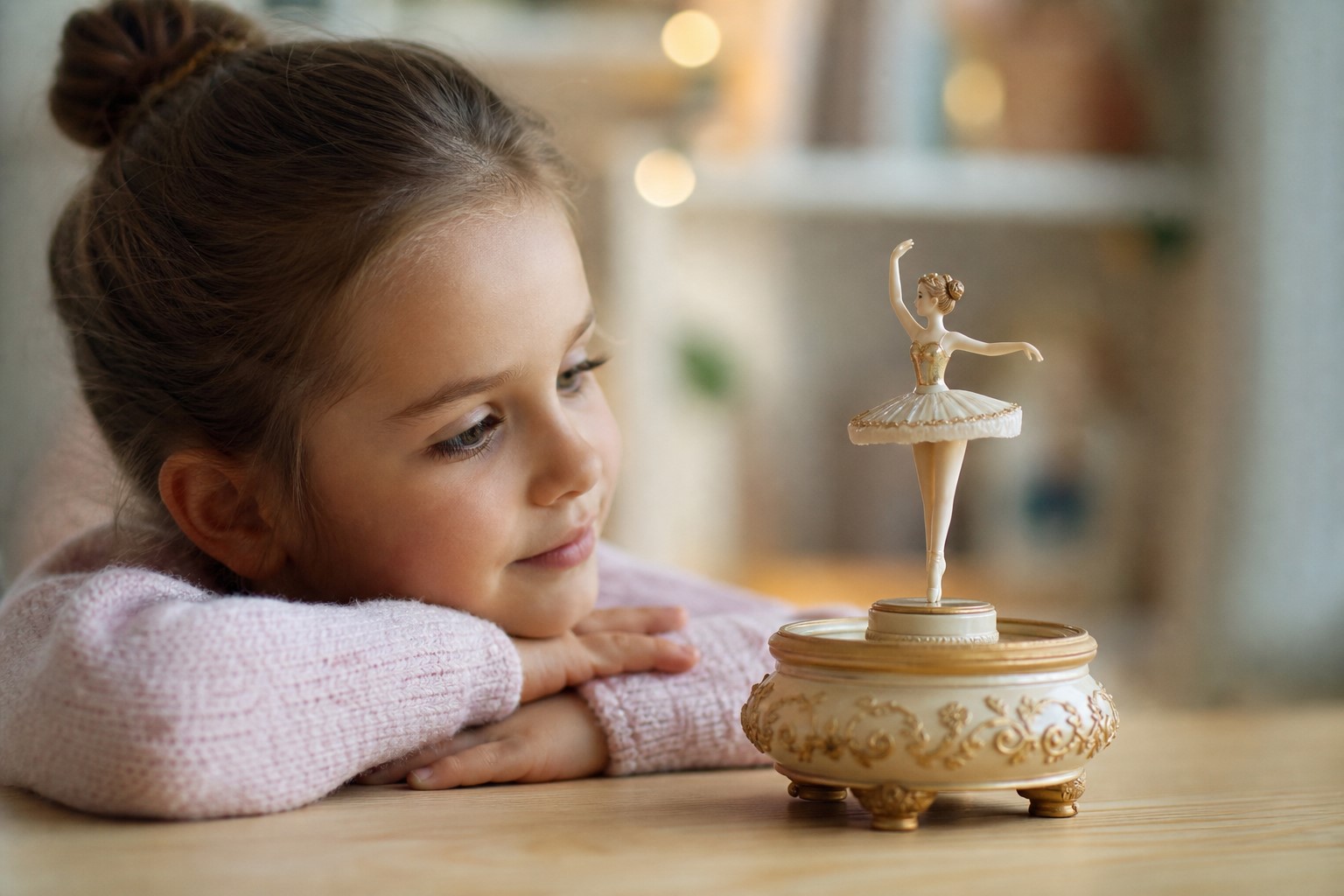
Nostalgia is only part of the explanation, and really only the passive part. What people are actually looking for when they reach for an analogue object is something more active: a deliberate invitation for slower, quieter moments back into everyday life. The specific associations, a grandparent’s bedroom, a childhood dance class, a particular birthday, are the point, because they transform a decorative object into a carrier of personal history.
The wind-up ritual also functions as something close to mindfulness, without requiring any special vocabulary. You stop, you use your hands, you pay attention for a minute while the music plays. In contrast to always-on screens and instant streaming, this tiny analogue pause has a texture that digital objects simply cannot replicate, and the mechanism imposes a gentle limit: the music plays, then it stops, and if you want more you have to choose it again.
There is also the question of physical presence. Unlike a playlist or a photo file, a music box takes up space on a shelf for years, moving from room to room and then from home to home, quietly witnessing life changes and absorbing new associations as it travels. The meaning it carries is highly personal and can shift over time: the same spinning dancer might represent a parent’s hopes for a child in one decade, and a grown woman’s private reminder to stay both soft and strong in the next. Across cultures, too, the image of a dancer and a simple melody need very little translation, and it is no coincidence that ballerina music boxes have been cherished for generations in families where tastes or even languages differ, making these boxes unusually good at bridging the gap between them.
Why this little dancer still moves us in a restless, digital world
How the modern ballerina music box has grown up
The classic design, pale pink tutu, single white figurine, lacquered timber case, is still made and still loved. But it represents only one end of a much wider range. Contemporary versions have moved toward sleek wooden cases with clean lines, glass dome enclosures, minimalist silhouettes, and bolder colour palettes that sit comfortably on a modern dressing table rather than looking like they belong to someone else’s childhood.
Functionality has kept pace with aesthetics. Many current boxes integrate proper jewellery storage as a matter of course: ring rolls, compartment trays, small drawers, or a combination of all three, so the box earns its place as an everyday object rather than something taken out only on special occasions. A box used every morning accumulates meaning in a way that a display-only piece simply cannot.
Personalisation options have become meaningfully broader, too. A custom ballerina music box from Only One Music Box allows buyers to personalise not only the melody but also the engraving and overall design, creating a keepsake that reflects a unique story or memory. Custom song choices now range from Tchaikovsky’s Swan Lake and Beethoven’s Moonlight Sonata to film themes and a couple’s first-dance song, while engraved plaques, photo-frame lids, and embossed monograms allow the box to tell a specific story. Perhaps most importantly, the figurines themselves have diversified: dancers representing different skin tones and body types are increasingly available, which matters enormously, because a keepsake should allow the person receiving it to see themselves inside the box, not just an idealised image from another era. Subtle technical improvements, higher-quality mechanisms that play at a steadier tempo and more securely fixed figurines, have made the objects more reliably heirloom-worthy. The best modern versions preserve the hand-wound, watch-it-turn magic; they simply do it with more care.
Occasions that suit a spinning dancer, and how to choose one that lasts
Some gifts benefit from context, and a dancer-topped music box carries particular weight at specific moments. A new baby or christening calls for a first keepsake the child can grow into rather than grow out of, and a music box carrying a simple, recognisable melody fits that brief well. Early birthdays, especially for children drawn to music or movement, give the box immediate resonance. Graduations are a natural match, since the discipline and perseverance that ballet represents translates directly to the work a student has just completed.
At the other end of the age range, the box works just as well. An anniversary gift that plays a couple’s special song carries more personal weight than almost anything else you could give. A significant birthday for someone returning to a childhood passion, say an adult who has just gone back to dance classes, is another moment where the symbolism lands rather than merely decorates. For bereavement or memorial, the ritual of opening the lid and hearing a familiar melody can provide a kind of comfort that other objects simply cannot offer.
It is also worth normalising the idea of choosing one for yourself. For an adult who wants a calmer morning ritual or wants to mark a fresh chapter, a box that reflects your current taste is an act of considered self-care. The question to ask is not ‘Is this a bit old-fashioned?’ but ‘What story do I want this box to hold?’
On the practical question of quality: look for a solid, well-finished case in wood, metal, or sturdy resin rather than lightweight plastic, which will crack and dull over years of use. Wind the mechanism and check that it plays at a steady, even tempo without slowing or sticking. The figurine should be securely anchored and neatly painted, with no wobble when the mechanism runs. For the melody, choose something with longevity: a piece of classical music, a film theme that will not feel tied to a single moment, or a song whose meaning runs deep. When in doubt, simpler and more quietly elegant will almost always age better than a novelty design built around a passing trend. A box chosen with that level of intention tends to become exactly what it looks like: something worth keeping.