
Ubersuggest vs Semrush vs Ahrefs
Quick Verdict
Ubersuggest, Semrush, and Ahrefs all help with SEO research, but they are not built for the same buyer. Ubersuggest is the easiest pick for beginners and smaller budgets. Semrush is the broadest all-in-one marketing suite for teams that want SEO, paid search, content, local, reporting, and brand visibility tools in one place. Ahrefs is the strongest fit for backlink research, competitive analysis, and technical SEO teams that care deeply about link and content data.
If your main goal is buying or managing backlinks rather than paying for a full SEO suite, the better move may be to use a dedicated backlink workflow instead of stacking another expensive platform into your tool bill.
Ubersuggest vs Semrush vs Ahrefs at a Glance
|
Tool |
Best For |
Big Strength |
Main Tradeoff |
|
Ubersuggest |
Beginners, creators, local businesses, and lower-budget SEO work. |
Simple keyword research, competitor snapshots, audits, and content ideas. |
Not as deep as Semrush or Ahrefs for large campaigns or enterprise reporting. |
|
Semrush |
Agencies, marketing teams, paid search teams, and all-in-one SEO workflows. |
Massive feature set across SEO, PPC, content, local, social, and visibility. |
Can feel expensive or overwhelming if you only need a few core SEO tasks. |
|
Ahrefs |
Backlink research, competitor analysis, content research, and technical SEO. |
Strong link data, Site Explorer, keyword data, and audit/research workflows. |
Premium pricing and less ideal if you want a broad marketing suite beyond SEO. |
Ubersuggest Overview
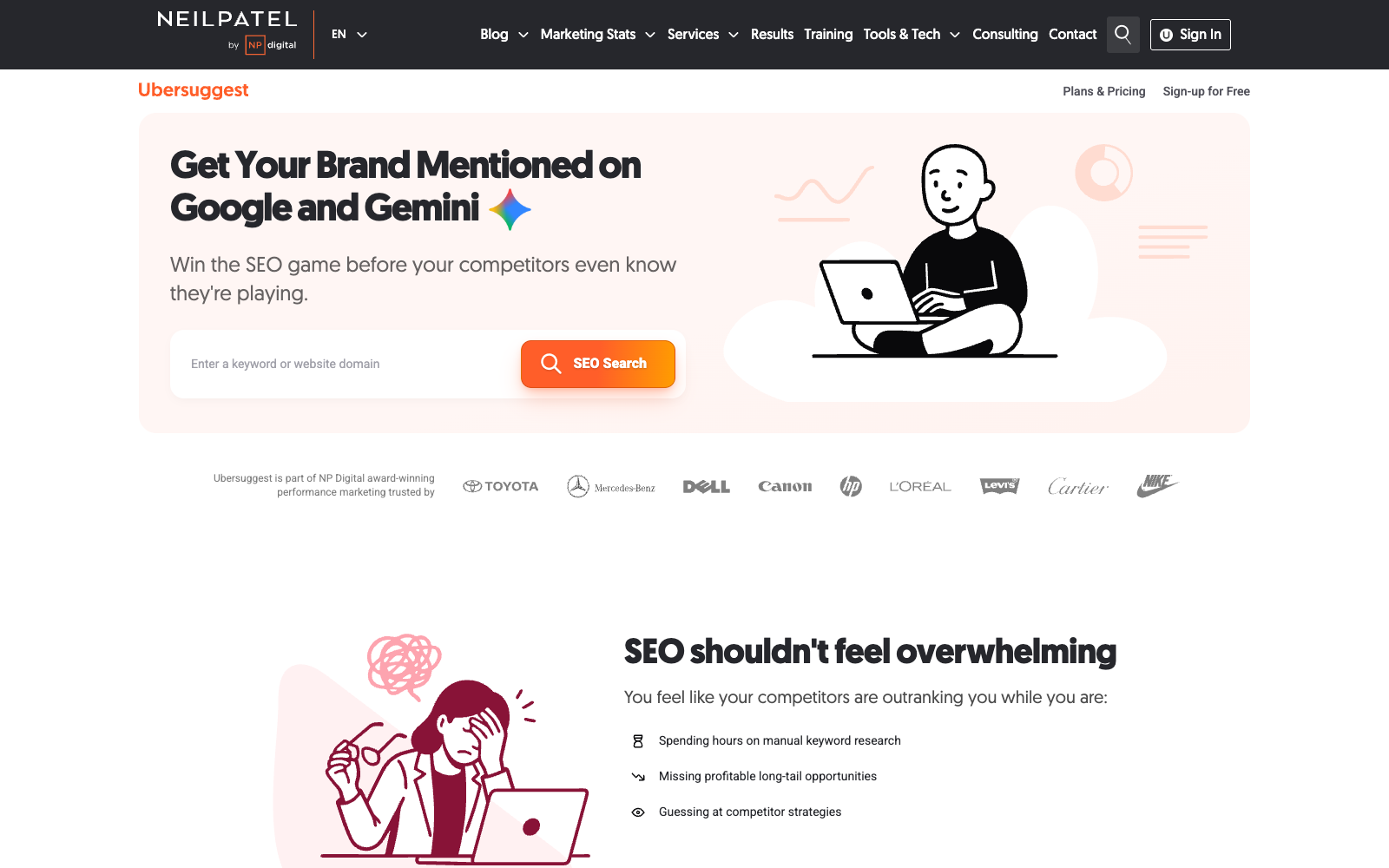
Ubersuggest is the most approachable option in this comparison. The homepage positions it around helping brands get mentioned on Google and Gemini, with an SEO search input front and center. That matches how most people use Ubersuggest: quick keyword research, basic competitor checks, domain overviews, content ideas, and site audit guidance without needing an enterprise SEO setup.
The biggest advantage is simplicity. Ubersuggest is easier to learn than Semrush or Ahrefs, and it makes sense for bloggers, small businesses, freelancers, creators, and teams that need a practical SEO tool without a heavy learning curve. It is also the easiest recommendation if you mainly need a keyword research tool and do not want to pay for a deep professional suite.
The downside is depth. If you manage large sites, multiple clients, heavy reporting, advanced backlink analysis, or technical SEO at scale, Ubersuggest can start to feel lighter than the other two. It is useful, but it is not trying to be the most powerful enterprise SEO platform.
Semrush Overview
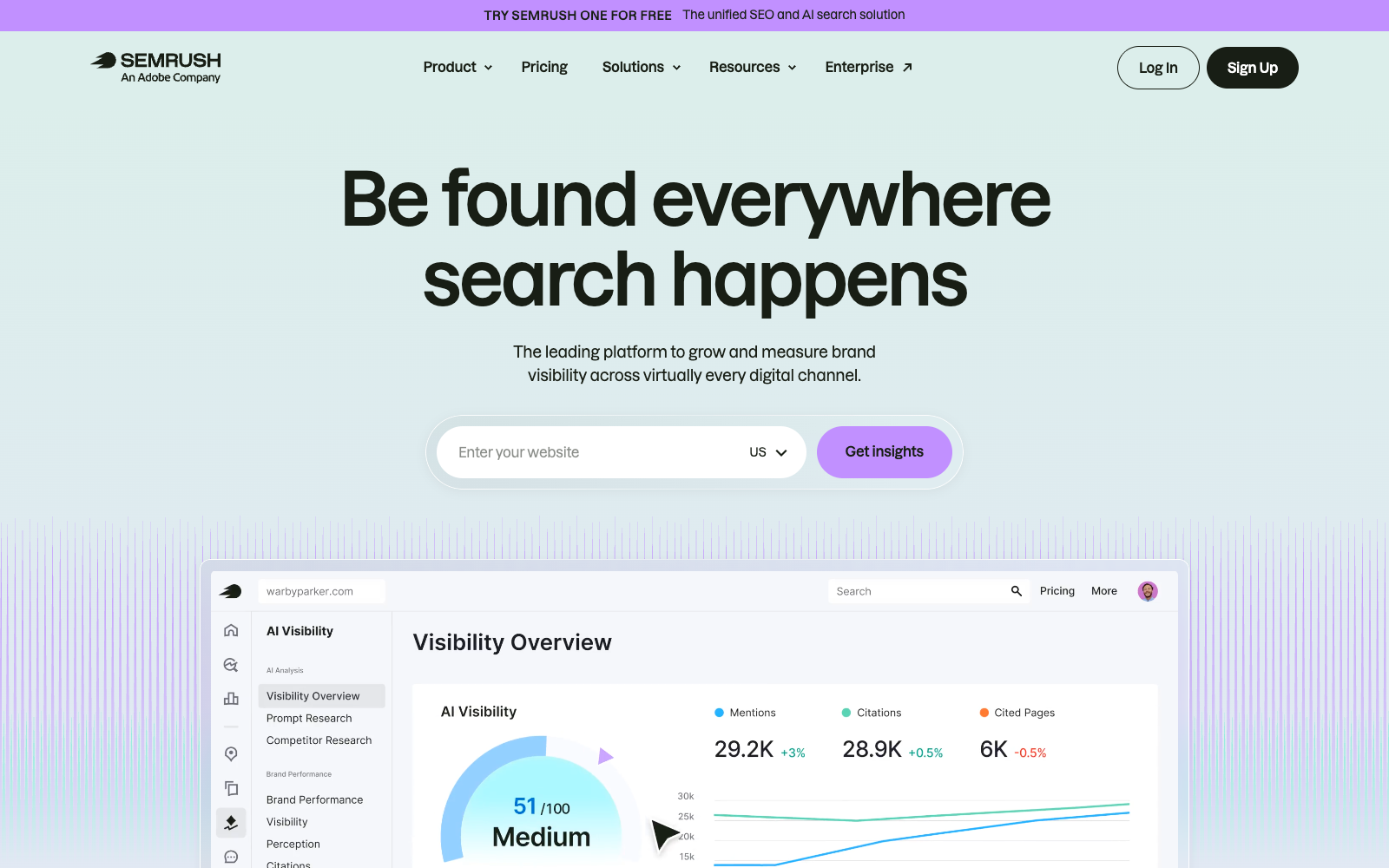
Semrush is the broadest platform of the three. Its homepage focuses on being found wherever search happens and growing brand visibility across digital channels. That positioning is important because Semrush is not only an SEO tool. It also covers paid search research, content marketing, local SEO, competitor tracking, social and advertising insights, and reporting workflows.
Semrush is a strong fit for agencies and marketing teams that need one platform to support many different campaigns. If you need keyword research, rank tracking, competitor research, content planning, site audits, PPC data, and reporting in one place, Semrush is usually easier than stitching several smaller tools together.
The tradeoff is cost and complexity. Semrush can be more tool than a smaller site needs. If you only want keyword research or backlinks, the interface and subscription can feel heavy. The value is highest when a team actually uses multiple parts of the suite instead of paying for it as a fancy keyword tool.
Ahrefs Overview
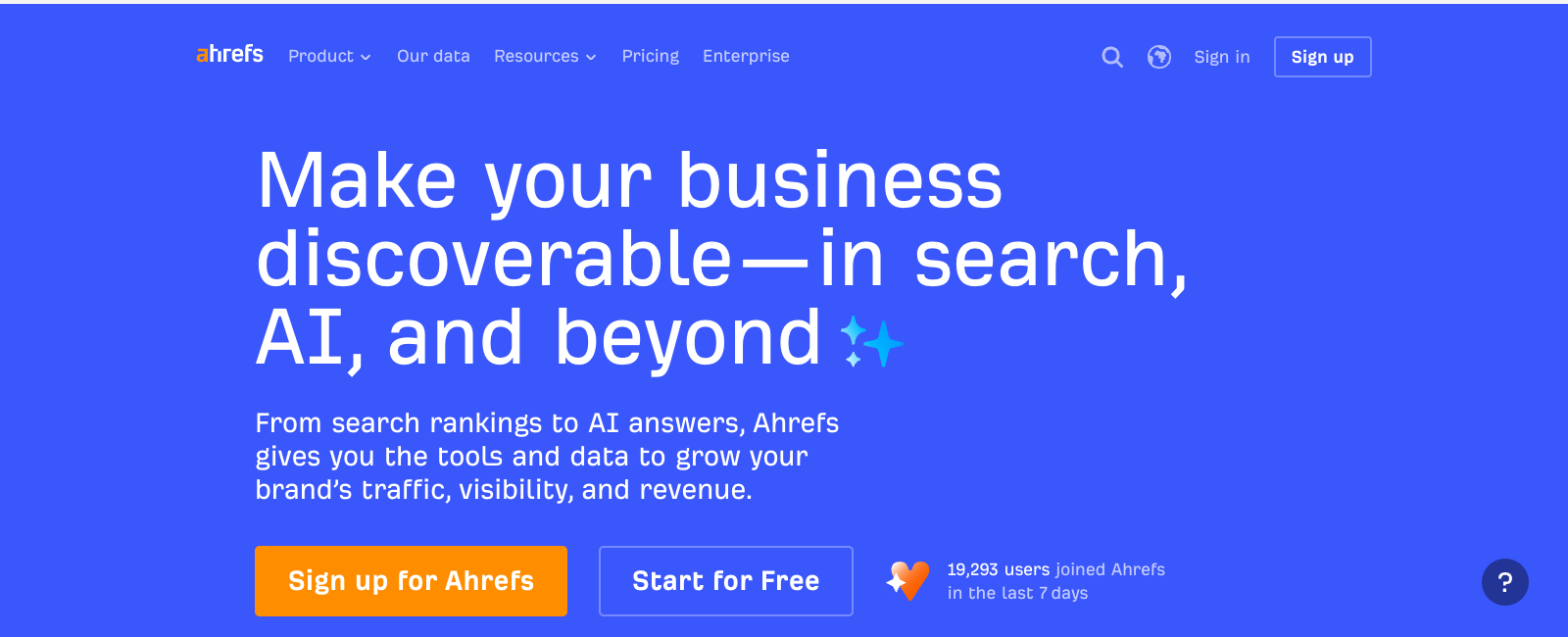
Ahrefs is the most SEO-specialized option in this comparison. Its homepage positions the platform around making a business discoverable in search, AI, and beyond. In practice, Ahrefs is best known for backlink research, competitive analysis, keyword research, content exploration, and site audits.
Ahrefs is especially useful when backlinks and competitor content are central to your SEO strategy. Site Explorer, backlink reports, competing pages, content gap research, and keyword tools make it easier to understand why competitors are ranking and where your own site is missing authority or content depth.
The main downside is that Ahrefs is still a premium SEO platform. If your team does not need deep backlink data or advanced research workflows, it can be hard to justify compared with simpler tools. It also is not as broad as Semrush for teams that want PPC, social, local, and wider marketing visibility features in one ecosystem.
Which Tool Is Best for Keyword Research?
For basic keyword research, Ubersuggest is usually enough. It gives you keyword ideas, search volume, difficulty indicators, and competitive snapshots without overwhelming the user. For deeper keyword planning across multiple markets, Semrush and Ahrefs are stronger. Semrush is better if you also care about paid search and content planning. Ahrefs is better if you want to connect keyword opportunities with competitor pages and backlink strength.
Which Tool Is Best for Backlink Research?
Ahrefs is the strongest traditional backlink research tool in this group. It is built around link intelligence and competitor analysis, which makes it helpful for finding referring domains, broken links, link gaps, and pages attracting authority. Semrush also has backlink tools, and they are useful inside a broader marketing workflow. Ubersuggest offers backlink data too, but it is better for lighter checks than deep link research.
That said, backlink research and backlink execution are different things. Ahrefs and Semrush can help you analyze links, but they do not automatically build, manage, and fulfill link placements for you. If the real problem is acquiring backlinks consistently, a backlink-focused system can be more practical than another reporting suite.
Which Tool Is Best for Agencies?
Semrush is usually the best agency fit if the agency sells broad SEO and marketing retainers. It can support audits, competitive analysis, PPC research, content planning, reporting, and multiple client workflows. Ahrefs is excellent for SEO specialists and link-focused campaigns. Ubersuggest is better for small client accounts, quick audits, and lower-budget keyword research.
For agencies that resell backlink services, the best stack may not be one tool. A team might use Semrush or Ahrefs for analysis, then use a separate backlink fulfillment system to actually create links and reports for clients. That keeps research and execution from getting tangled together.
Price Fit: Which One Is Worth It?
Ubersuggest is the best fit when price matters most and you still need usable SEO research. Semrush is worth it when your team will use the wider suite and can turn multiple features into client work or campaign decisions. Ahrefs is worth it when backlink research, competitor analysis, and content opportunity discovery are central to your SEO strategy.
The wrong choice is paying for a premium suite because it feels like the “serious” option, then only using ten percent of it. If your workflow is mostly keyword ideas and basic audits, Ubersuggest may be enough. If your workflow is broad marketing reporting, Semrush makes more sense. If your workflow is link analysis and SEO research, Ahrefs is hard to beat.
Final Recommendation
Choose Ubersuggest if you want the simplest and most budget-friendly SEO research tool. Choose Semrush if you want the broadest all-in-one platform for SEO, PPC, content, and visibility. Choose Ahrefs if backlink research, competitor research, and search-focused analysis matter most.
But if your actual goal is to get more backlinks built and managed, do not confuse analysis tools with fulfillment. Ubersuggest, Semrush, and Ahrefs can help you understand SEO opportunities. A dedicated backlink platform is better when the job is turning those opportunities into consistent link acquisition.