
What We Lose When Justice Becomes Just Another Transaction
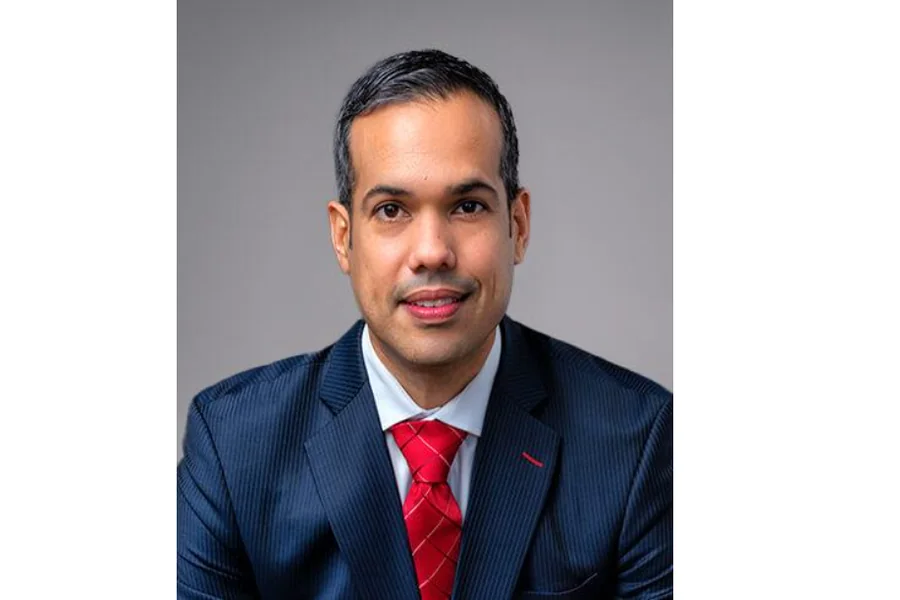
For more than two decades, Texas trial lawyer George Salinas has represented people whose lives fall into two distinct chapters: everything before the accident, and everything after. A young father struck by a commercial vehicle on his way home from work. A widow struggling to explain to her children why their father isn’t coming back. A college student left to wonder whether a permanent injury has quietly rewritten every plan for the future.
The legal system, by its nature, enters these stories after the fact, after the trauma has already occurred, after the ambulance has already left, after families have already begun making the impossible phone calls. “What people need first isn’t a lawsuit,” Salinas says. “They need someone to help them understand what’s happening.”
It’s a subtle distinction, but one that reveals something larger about how we misunderstand personal injury law. Public conversation tends to fixate on settlements, verdicts, and courtroom battles, as if justice begins the moment legal papers are filed. In truth, it begins much earlier, in the uncertainty that follows a traumatic event, when people are searching for answers long before they’re thinking about compensation.
For Salinas, that understanding didn’t come from law school. It came from a family story he never lived to witness himself.
The Accident That Happened Before He Was Born
The year before he was born, his grandparents were driving home to Del Rio, Texas, after a high school track meet. They had recently replaced the tires on their vehicle. One of those tires failed on the highway, and the car rolled over. His grandfather survived with severe injuries. His grandmother did not.
What the family was left with was grief, but also unanswered questions. Why did it happen? Could it have been prevented? Was someone responsible? No one ever pursued those answers.
Years later, once he had become a trial lawyer himself, Salinas came to realize that what stayed with him wasn’t the tragedy alone, but the absence of accountability that followed it. His family never received an explanation for why a routine drive home became the worst day of their lives, and that unresolved silence became the quiet thread running through much of his career. “Whenever I’m representing a family today, I’m reminded that they deserve answers,” he says. “Understanding how something happened and why it happened is part of the healing process.”
When a Person Becomes a Claim Number
That perspective feels especially relevant in a culture that increasingly measures everything by efficiency. Insurance companies process claims faster than ever. Artificial intelligence can summarize medical records in seconds. Algorithms evaluate risk, estimate damages, and assign financial value with striking speed. None of this is inherently bad, technology can genuinely make systems work better. The trouble starts when efficiency becomes the only goal.
Early in his career, Salinas worked briefly on the defense side, representing insurance companies before moving into plaintiff advocacy. That experience gave him a firsthand look at how claims get evaluated, and how easily the people behind them can disappear into the process. To an insurance carrier, a case may be one of thousands moving through the system that month. To the injured person, it is the only case that matters, because it is the only life they have.
That distinction shapes everything about the way Salinas practices. Even as his firm has grown into one of the larger San Antonio personal injury law firms, he has refused to abandon the habits many attorneys shed as their businesses expand. He still gives clients his cell phone number. He insists on remaining accessible. He believes that difficult conversations should happen directly, not through layers of staff, whenever possible. Some colleagues consider that impractical. Salinas considers it necessary, because clients tend to remember how they were treated long after the legal process has ended.
Why Some Conversations Matter More Than Courtrooms
That same philosophy shapes how Salinas talks about honesty, a quality he believes has become undervalued in an industry built around persuasion. He would rather lose a prospective client by being candid about the realities of a difficult case than promise an outcome he cannot guarantee. He often compares it to medicine: most people don’t want a doctor who tells them only what they hope to hear. They want someone willing to explain the diagnosis honestly, even when the conversation is uncomfortable. Trust, he believes, is built in exactly those moments.
That emphasis on relationships extends to something larger about the nature of advocacy itself. For many people, lawyers represent conflict. Salinas sees something different, at its best, legal advocacy is education. Over the years, he has met countless people who assumed they couldn’t afford representation, who believed they had waited too long to ask questions, or who mistakenly thought their immigration status barred them from pursuing justice after someone else’s negligence caused them serious harm.
Those misunderstandings carry real consequences. Some people accept quick settlements before they understand the full extent of their injuries. Others delay medical treatment, assuming they’ll recover on their own, only to find that insurance companies later use those gaps in care to question the legitimacy of their claims. Many never seek advice at all, believing the civil justice system belongs to someone else. “I think people deserve to understand their rights before they’re forced to make decisions,” Salinas says.
Education, in this sense, may be one of the least discussed forms of advocacy, and one of the most important. A community that understands how its institutions function is better equipped to navigate them, whether the issue involves healthcare, education, finance, or Texas personal injury law.
The Quiet Work of Earning Trust
That commitment to service continues well outside the courtroom. Over the years, Salinas has volunteered with Big Brothers Big Sisters, served on nonprofit boards supporting families and pet owners, taught as an adjunct professor, and devoted significant time to ConnectAbility, an organization providing sports and arts programs for children with special needs. His involvement took on a more personal dimension after his oldest son was diagnosed with autism, and like many parents in that position, he discovered that advocacy doesn’t live only in professional settings. Sometimes it begins at home, in learning how to navigate systems that weren’t necessarily built with every family in mind.
Those experiences have broadened his sense of what justice actually means. It is about accountability, certainly. But it is also about community, about making institutions more accessible, helping people feel seen, and recognizing that every policy eventually touches someone’s daily life.
Life Beyond the Verdict
Perhaps that is why Salinas resists reducing success to verdicts or settlements, even though those outcomes matter a great deal. The cases he remembers most vividly aren’t necessarily the largest ones. They are the families who regained their footing after unimaginable loss, the parents who found a path forward for their children, the client who finally felt believed after months of being treated like just another claim number.
These are not the stories that make headlines, and they don’t fit neatly into a television commercial or a social media clip. But they say something important about the kind of society we want to build. When institutions become more efficient but less human, everyone loses something. The systems that work best are the ones that never forget the people they were built to serve.
Key Takeaways
- Justice begins long before a courtroom. For many families, the first step isn’t filing a lawsuit, it’s understanding their rights, finding answers, and having someone they trust to guide them through unfamiliar territory.
- Accountability is about more than financial compensation. Settlements and verdicts matter, but understanding why a tragedy happened, and helping prevent it from happening again, can matter just as much.
- The strongest legal advocacy starts with empathy. Every accident, catastrophic injury, or wrongful death attorney cleveland case represents a person whose life has changed, not simply another insurance claim.
- Trust is earned through honesty, not promises. Transparent communication and realistic expectations build stronger relationships than guarantees no attorney can actually keep.
- Technology should never replace humanity. As artificial intelligence continues reshaping insurance claims and the civil justice system, preserving empathy remains essential to achieving meaningful justice.
- Community leadership strengthens trial advocacy. Service outside the courtroom, whether mentoring young people or supporting families through nonprofit work, creates advocates who understand more fully the people they serve.
In the End, It Has Always Been About People
The law cannot erase tragedy. It cannot undo a fatal crash or restore years that have been lost. What it can do, when practiced with integrity, is give people answers, restore their dignity, and remind them that accountability still matters. In an era increasingly defined by automation, that may be one of the most human acts left.