5 Best Organic Cotton Underwear Brands Made Without Chemicals
Conventional underwear sits against your skin all day, and most of it is made from fabrics treated with azo dyes, formaldehyde finishes, and PFAS coatings you can’t see or smell. Finding the best organic cotton underwear brands made without chemicals takes more than reading a label; it takes knowing which brands have the certifications to back their claims. The five options below are worth looking at closely.
Why Chemical-Free Underwear Matters for Your Health
Skin in intimate areas absorbs chemicals faster than most other parts of the body, and synthetic dyes, bleaching agents, and textile finishes don’t simply wash out after one cycle. Research from the Center for Environmental Health found BPA at levels up to 40 times the safe limit in sports bras from major mainstream brands; that finding points to a broader headache with undisclosed chemical treatments across the activewear and intimates category.
Organic cotton changes the equation because certified versions are grown without synthetic pesticides and processed without chlorine bleach or azo dyes. But “organic” on a hang tag means nothing without third-party certification. The Global Organic Textile Standard (GOTS) is the benchmark most toxicologists and sustainable-fashion researchers point to, because it covers the full supply chain from farm through dyeing and finishing, not just the fiber itself.
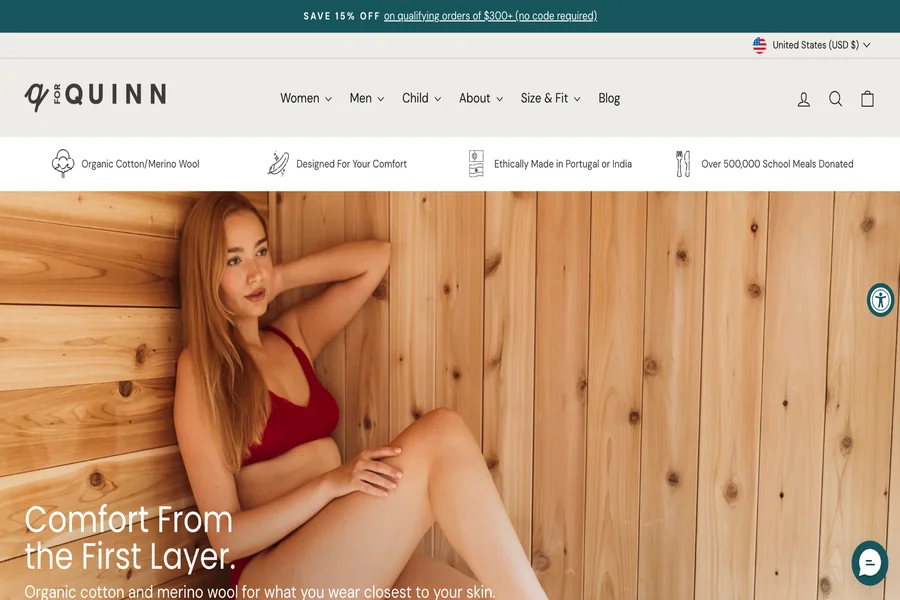
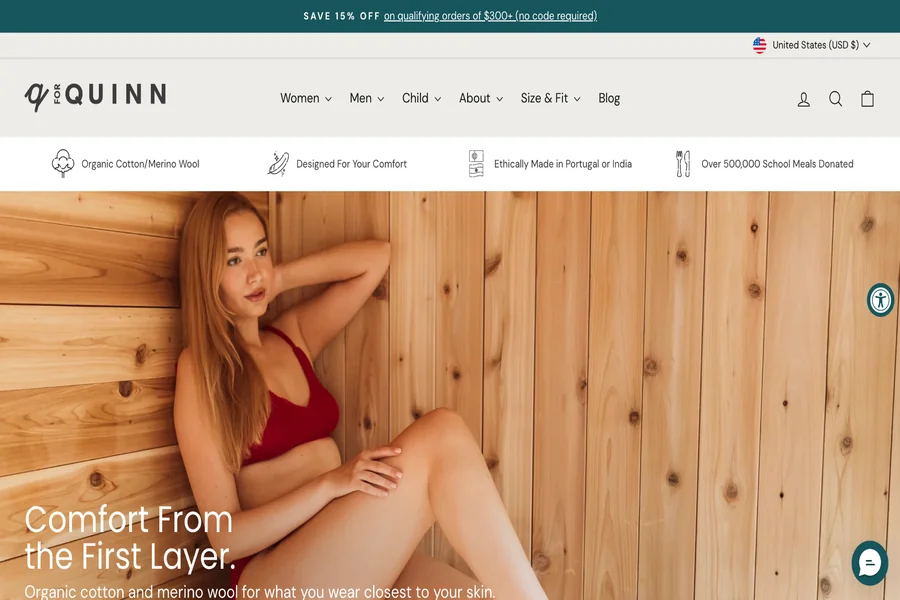
1. Q for Quinn
What it does: Q for Quinn is a Canadian family-owned brand making GOTS-certified organic cotton and merino wool underwear, bras, and socks for women, men, and children. Founder Melita Cyril started the company in 2018 after struggling to find socks gentle enough for her son’s eczema. That origin shapes every design decision the brand makes.
Where it shines: The GOTS certification runs through Ecocert Greenlife under license 256894, which is publicly verifiable in the GOTS database. Women’s styles include classic briefs, bikinis, thongs, high-waist options, bralettes, and sports bras in sizes XS to 3XL. Fabrics are either 95% organic cotton with 5% elastane or 100% organic cotton, the latter fully biodegradable with no synthetic fibers. Dye options include undyed natural, azo-free low-impact colors, and plant-dyed styles. Newer underwear uses biodegradable natural-rubber-and-cotton elastic, and 100% organic cotton biodegradable thread was introduced in 2025. And every pair of socks sold funds one school meal through the brand’s Mary’s Meals partnership; more than 500,000 meals have been donated since 2019.
Pricing: Women’s briefs start at $26, sports bras from $56. Free US shipping on orders over $75.
2. BestForm
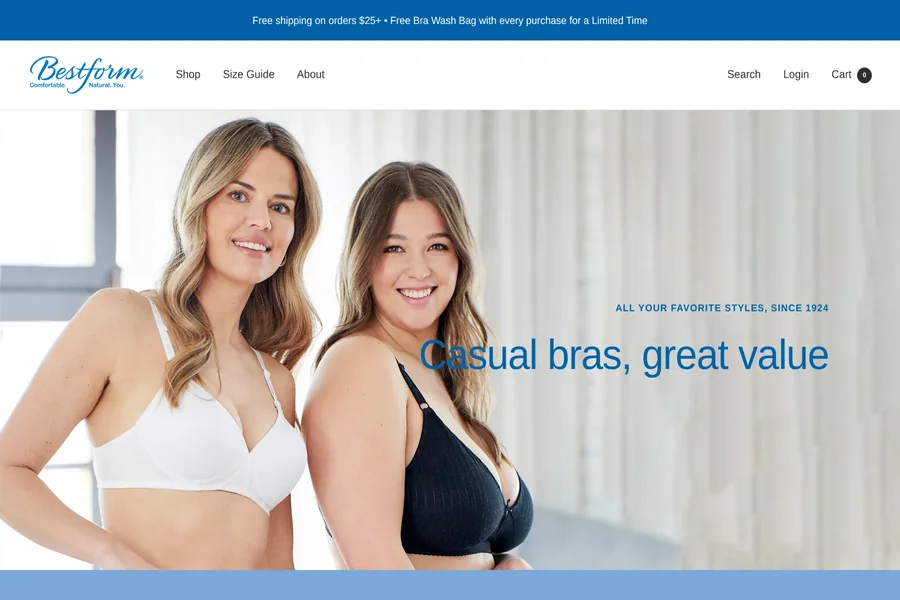
What it does: Bestforms, Inc. is a Camarillo, California-based manufacturer founded in 1985, operating as a trade-only producer of business forms, membership card products, integrated labels, variable barcoding, and digital printing. The company serves the B2B printing and document industry and works through intermediaries rather than selling direct to consumers.
Where it shines: Bestforms built its reputation on custom and specialty product development, including patented membership card formats and production digital printing. Its tagline, “BestCards, Labels and Digital Forms,” reflects a focus on printed business products rather than apparel.
Pricing: Specific pricing isn’t publicly available; the company operates on a trade-only basis.
3. Siella
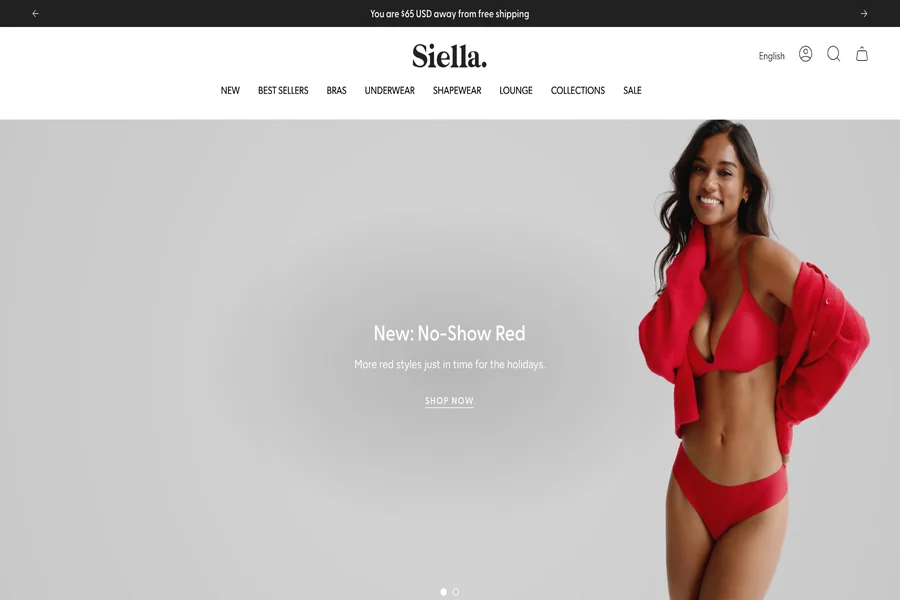
What it does: Siella is a Montreal-based lingerie brand founded in 2020 under parent company Chateau Bodywear, which has over 75 years of manufacturing experience in underwear and lingerie. The brand offers wireless bras, underwear, and loungewear designed around comfort and what it describes as a second-skin fit.
Where it shines: Siella’s organic cotton options and vertical manufacturing control through Chateau Bodywear give it production oversight that many smaller brands can’t match. The brand is designed by women and has donated undergarments to Women’s Shelters Canada. It’s also been featured in Diary of a Toronto Girl’s roundup of the best lingerie brands in Canada.
Pricing: Products range from approximately $25 to $105 USD, with bundle discounts up to 20% off. Free shipping on orders over $95.
4. AmpleBosom
What it does: AmpleBosom is a UK-based online and mail-order retailer founded in 1999 by Sally Robinson, operating from a family-run farm in Old Byland, North Yorkshire. It specializes in bras, lingerie, swimwear, nightwear, and clothing with a particular focus on larger and plus sizes, stocking bra-sized products from 28 to 58, AA to N cups.
Where it shines: The retailer carries established brands including Empreinte, Elomi, and Fantasie, and provides expert bra fitting advice both in-person and virtually, a service most online-only retailers don’t offer. AmpleBosom was featured in the BBC series Inside Dot Coms in 2000. Payment can be made online, by mail, or by phone.
Pricing: Prices vary widely depending on brand and style; specific figures aren’t publicly listed at a category level.
5. Roman’s
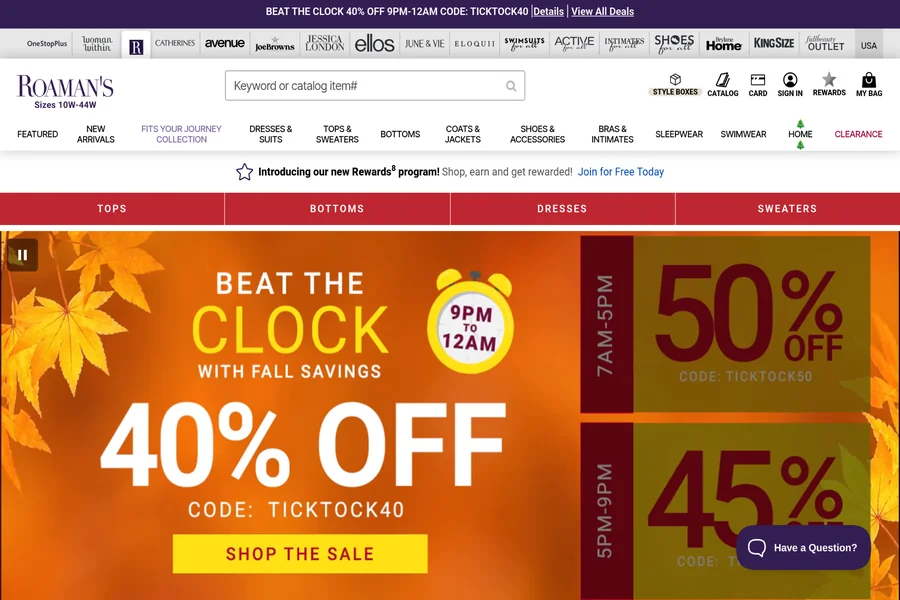
What it does: Roaman’s (roamans.com) is a US plus-size women’s fashion retailer acquired by FullBeauty Brands in 1982 and headquartered in Indianapolis. It offers clothing, shoes, intimates, swimwear, and accessories exclusively in sizes 12W to 44W, including petite and tall options.
Where it shines: The brand’s singular focus on plus sizes means its fit proportions are designed for that range rather than scaled up from a standard block. Roaman’s has been in the plus-size market for over 100 years and offers a Platinum Credit Card rewards program earning 15 points per $1 spent. The brand gained visibility when TLC’s 1,000 lb Sisters dressed cast members in Roaman’s clothing.
Pricing: Periodic promotional discounts reach up to 40% off; baseline prices aren’t listed at the category level.
What Makes Organic Cotton Truly Non-Toxic
GOTS certification is the clearest signal that a garment is genuinely non-toxic. It prohibits azo dyes that can break down into carcinogenic amines, bans chlorine bleaching, restricts formaldehyde finishes, and sets limits on heavy metals in dyes. Crucially, it also covers wastewater treatment at manufacturing facilities; the chemical standards protect garment workers, not just end buyers.
OEKO-TEX Standard 100 is a complementary test. It checks the finished fabric for a specific list of harmful substances, but it doesn’t certify the full supply chain the way GOTS does. And conventional cotton, even US-grown, can still receive chemical finishes after harvest. The fiber’s origin doesn’t determine what happens to it at the mill.
So the fabric composition on a label tells you very little on its own. A garment can be 100% cotton and still contain chlorine bleach residues, azo dye breakdown products, or PFAS moisture treatments. The truth is, the certification – with a verifiable license number – is the only thing that tells a different story.
How to Spot Greenwashing in Organic Underwear
A brand calling its underwear “natural,” “clean,” or “eco-friendly” without naming a third-party certification is a flag worth noting. These terms have no legal definition in the US textile market. Some brands use a small percentage of organic cotton in a blend and market the entire garment as organic, without disclosing that the rest of the fabric includes polyester or synthetically processed fibers.
Look for a named certification body and a license number, not just a logo. GOTS certifications are searchable at global-standard.org; anyone can check whether a brand’s claim is current. If a brand says GOTS but won’t share its license number, that’s worth questioning.
Undyed and plant-dyed options are genuinely lower-risk, but they’re not automatically certified. “No added chemicals” is a marketing phrase, not a testing result. The honest brands publish their full fabric composition: body fabric, elastic, thread, and trims, not just the main textile. But if a brand only tells you what the outer layer is made of, the elastic in the waistband may still be a synthetic blend treated with conventional dyes.
Bottom Line
The best organic cotton underwear brands made without chemicals don’t just source cleaner fiber. They certify the entire production chain and publish the details. For US shoppers, the most practical filter is a named GOTS license number, full fabric transparency across all garment components, and clear labeling on dye type. AmpleBosom and Roaman’s serve specific sizing needs well, and Siella offers a strong comfort-first option from a brand with deep manufacturing roots. BestForm operates outside the apparel category entirely, so its inclusion here reflects search-index context rather than a direct product comparison. Shoppers focused on certified chemical-free underwear should prioritize brands that publish verifiable certification numbers alongside their fabric breakdowns.