
Employee Recognition Ideas That Work: Reward Performance, Build a Stronger Workplace

Employee recognition is one of the most effective ways to strengthen workplace culture, improve morale and encourage long-term employee loyalty. However, meaningful appreciation requires more than handing out plaques, announcing an Employee of the Month or offering occasional bonuses.
Employees want to feel that their contributions matter. Whether someone exceeds a sales target, helps a colleague solve a difficult problem or consistently delivers exceptional work behind the scenes, recognizing those efforts reinforces the behaviors that make an organization successful.
The most effective employee recognition programs combine personalized awards, everyday appreciation and opportunities for professional growth. They also recognize that employees have different motivations and preferences.
Businesses that approach recognition strategically can create a workplace where appreciation becomes part of daily operations rather than an annual obligation.
Why Employee Recognition Matters More Than Ever
Employee recognition directly influences how people experience their workplace. When managers consistently acknowledge contributions, employees gain a clearer understanding of their value to the organization.
Recognition can also reinforce the connection between individual responsibilities and broader company objectives. An employee who receives acknowledgment for improving a customer experience, for example, understands that service quality is an important organizational priority.
Recognition programs can support several business objectives:
- Employee retention: Meaningful appreciation can strengthen employees’ commitment to their organization.
- Workplace engagement: Employees who feel valued may be more motivated to contribute ideas and take initiative.
- Team collaboration: Recognizing shared accomplishments encourages employees to support one another.
- Performance improvement: Celebrating specific achievements reinforces desirable behaviors.
- Company culture: Consistent appreciation helps establish mutual respect between employees and leadership.
However, recognition loses its effectiveness when awards become predictable, impersonal or disconnected from actual performance.
The goal should be to make every acknowledgment feel earned, relevant and authentic.
1. Personalize Recognition Awards Around Meaningful Achievements
Generic awards can communicate appreciation, but personalized recognition creates a stronger connection between an employee’s contribution and the acknowledgment they receive.
Instead of presenting everyone with identical certificates, businesses should consider the nature of each achievement and the individual’s preferences.
Vincent Nero, Vice President and General Manager at Successories, brings a recognition-industry perspective to the importance of connecting awards with specific accomplishments.
For organizations developing recognition programs, the practical lesson is to make the achievement itself the centerpiece of the award. The physical reward should reinforce the message rather than replace it.
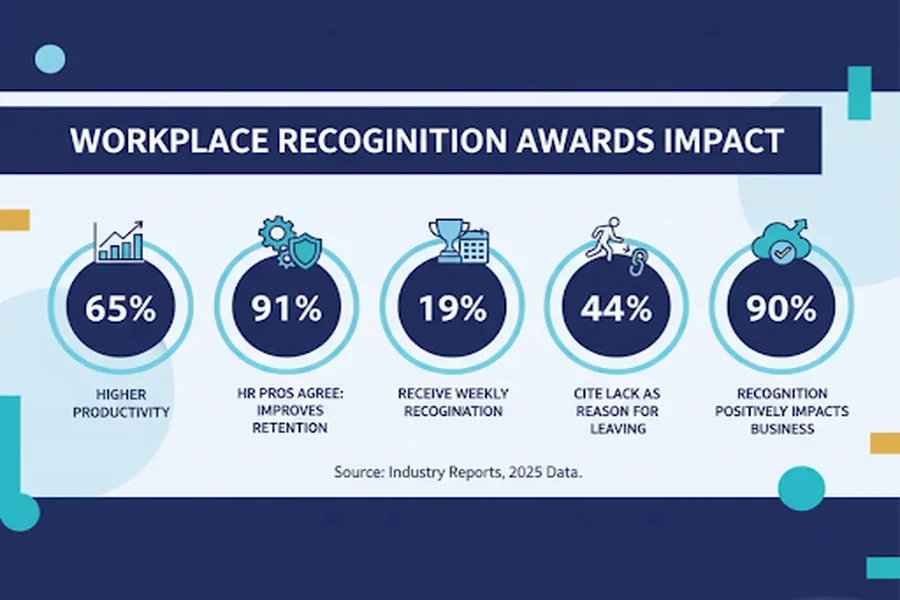
For example, an employee who successfully manages a challenging product launch could receive an engraved award describing the project’s impact. A team member celebrating ten years with the company might receive a personalized anniversary gift acknowledging their contributions.
Effective personalization can include:
- Engraved awards featuring specific accomplishments.
- Customized gifts reflecting individual interests.
- Recognition messages explaining the employee’s business impact.
- Awards connected to company values or professional milestones.
A personalized award can also become a lasting reminder of professional achievement, particularly when employees can display it in their workspace.
2. Celebrate Employees Who Work Behind the Scenes
Some of the most valuable employees receive the least public attention.
In industries such as event production, logistics, manufacturing and technical services, successful outcomes often depend on employees whose work customers rarely see.
Silver Grifo, Owner at Audio Visual Nation, operates in an industry where technical preparation, coordination and problem-solving are essential to delivering successful events.
This provides a practical example of why appreciation should extend beyond employees who interact directly with clients.
An audiovisual technician might spend several hours configuring equipment, troubleshooting connectivity issues and ensuring that a presentation runs smoothly. When the event succeeds, attendees may never realize how much preparation was required.
Managers can recognize these contributions through immediate acknowledgment after major projects, personal thank-you messages and opportunities for professional development.
For particularly demanding assignments, practical gestures such as additional schedule flexibility or a team appreciation lunch can also demonstrate consideration for employees’ time and effort.
The key is to recognize the work that made success possible, not simply the people who received the most visibility.
3. Introduce Peer-to-Peer Recognition Programs
Recognition should not depend entirely on managers or senior executives.
According to Timothy Clarke, Manager at Thrive Local, employees frequently observe contributions that leadership may overlook, including helping colleagues meet deadlines, sharing technical knowledge and resolving everyday operational challenges.

Peer-to-peer recognition creates opportunities for employees to acknowledge one another directly.
Organizations can introduce simple programs where team members nominate colleagues for monthly awards, share appreciation through internal communication channels or recognize collaborative achievements during meetings.
For example, a marketing specialist might nominate a designer who helped complete an urgent client campaign. A customer service representative could recognize a colleague who assisted with a complicated support request.
To maintain credibility, peer recognition should emphasize specific actions rather than popularity.
Companies can ask employees to explain what their colleague accomplished, how it benefited the team and which organizational value the contribution demonstrated.
This approach encourages employees to pay attention to positive behaviors throughout the workplace.
4. Reward Teamwork, Quality and Customer Commitment
Traditional recognition programs frequently emphasize individual achievements, particularly sales performance and revenue generation.
However, business success usually depends on collaboration between multiple departments.
Jeff Howicz, Chief Commercial Officer at TEAM Concept Printing, works in a commercial environment where customer satisfaction depends on coordination between sales, production and operational teams.
In commercial printing, for instance, securing a major customer order represents only one part of the process. Designers, production specialists and quality-control personnel must also ensure that the finished materials meet customer expectations.
A recognition program that rewards only the employee who secured the account risks overlooking everyone else responsible for successful delivery.
Businesses can address this by introducing awards for collaborative achievements, quality improvements and exceptional customer commitment.
Consider a production team that completes an urgent order ahead of schedule while maintaining quality standards. Recognizing the entire team, along with particularly important individual contributions, reinforces shared accountability.
Companies can also celebrate employees who identify costly errors, improve workflows or prevent customer complaints.
These contributions may not always generate immediate revenue, but they protect profitability and strengthen customer relationships.
5. Offer Recognition Beyond Monetary Rewards
Financial incentives can motivate employees, but money should not be the only form of appreciation.
Different employees value different rewards. Some appreciate public acknowledgment, while others prefer additional flexibility, career development opportunities or personalized gifts.
Organizations can offer several recognition options:
| Recognition type | Example | Best suited for |
| Personalized awards | Engraved plaques or trophies | Major achievements and milestones |
| Professional development | Training or certification sponsorship | Employees pursuing career growth |
| Flexible rewards | Additional paid time off | Demanding projects and exceptional effort |
| Public recognition | Company-wide announcements | Team accomplishments and major successes |
| Experiential rewards | Team lunches or special events | Collaborative achievements |
| Career opportunities | Leadership assignments or mentorship | High-potential employees |
Allowing employees to choose among several options can make recognition more meaningful.
For example, an employee who recently completed a demanding project may appreciate an additional day off more than a gift card. Another employee might prefer company-sponsored training that supports their long-term career goals.
The most valuable reward is often the one that demonstrates an employer understands what matters to the individual.
6. Make Recognition Timely and Consistent
Recognition becomes less meaningful when employees must wait months to receive acknowledgment.
A manager who immediately thanks an employee for resolving a difficult customer issue reinforces the importance of that behavior while the experience is still relevant.
Businesses should combine formal recognition programs with everyday appreciation.
Formal initiatives might include quarterly performance awards, service anniversaries and annual employee celebrations.
Informal recognition can happen during regular meetings, project reviews or one-on-one conversations.
For instance, a manager could begin a weekly team meeting by acknowledging employees who contributed to important accomplishments during the previous week.
However, consistency should not mean recognizing employees simply to satisfy a schedule.
Every acknowledgment should connect to a genuine contribution.
Managers should also avoid repeatedly celebrating the same high-profile employees while overlooking quieter contributors who consistently deliver reliable work.
7. Measure the Effectiveness of Employee Recognition Programs
Recognition programs should contribute to a healthier workplace, but organizations need evidence that their initiatives are producing meaningful results.
Employee surveys can help determine whether staff members feel appreciated and whether recognition practices are fair.
Businesses can also monitor employee turnover, engagement scores, participation in recognition activities and internal promotion rates.
For example, a company could introduce a quarterly recognition program and compare employee engagement survey results before implementation and six months afterward.
Managers should examine whether recognition reaches employees across departments, seniority levels and job functions.
If most awards consistently go to sales representatives while operational teams receive little acknowledgment, the program may need broader criteria.
Employee feedback is equally important. Asking staff members which forms of recognition they value can reveal opportunities to improve the program without necessarily increasing its budget.
Building a Workplace Where Appreciation Becomes a Habit
Employee recognition should not be treated as a standalone human resources initiative. It should be part of how managers communicate, evaluate performance and develop their teams.
Personalized awards can commemorate significant accomplishments, while everyday appreciation reinforces positive behaviors as they happen. Peer recognition strengthens collaboration, and team-based awards acknowledge the shared effort behind business success.
The strongest programs also make room for employees who contribute outside the spotlight.
Ultimately, effective recognition is about showing employees that their efforts are noticed, their contributions have value and their professional growth matters.
When organizations make appreciation specific, timely and inclusive, recognition becomes more than a reward. It becomes a lasting part of workplace culture.