
How to Spot an Authentic Vintage Manchester United Shirt
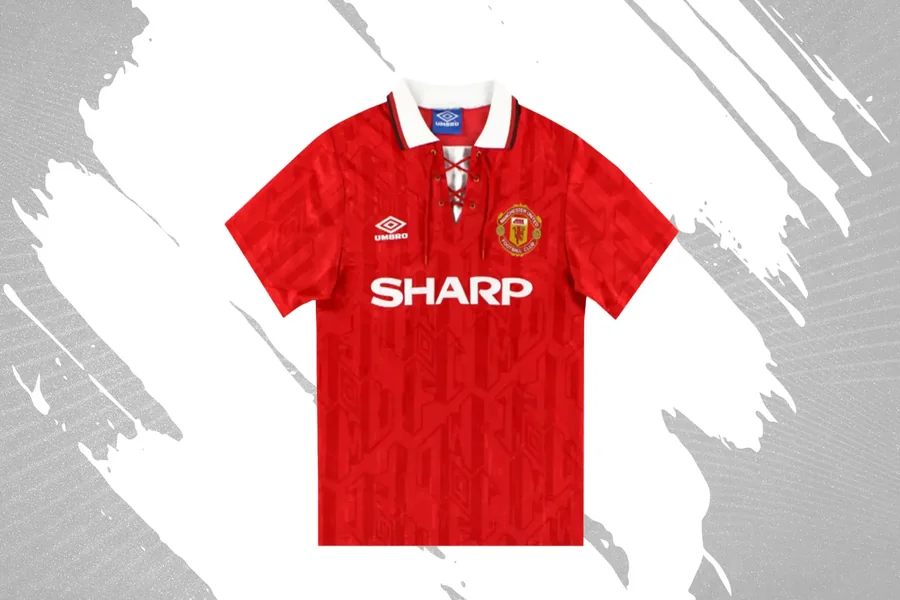
Check three things in order: whether the sponsor, crest and manufacturer logically belong to the season being claimed, what the labels inside the collar and side seam actually say, and how the fabric and printing have aged. A genuine 1990s United shirt will have an Umbro label with a size given in inches, a country of manufacture, and a crest that either includes or omits the words “Football Club” depending on whether it predates 1998. Get those three checks right and you will catch the overwhelming majority of misdescribed listings.
The complication is that not every non original shirt is a fake. Officially licensed retro reissues from brands like Score Draw and Toffs, along with Adidas Originals reproductions, are legitimate products that were never meant to deceive anyone, but they end up resold as vintage by sellers who either do not know the difference or would rather not mention it. Telling an honest reissue from a genuine period shirt matters as much as spotting an outright counterfeit.
Match the Sponsor, Crest and Manufacturer to the Season
United’s commercial history gives you a precise dating framework, and it is the fastest check available. Sharp Electronics appeared on the front from 1982 until 2000, then Vodafone until 2006, AIG until 2010, Aon until 2014, Chevrolet until 2021, TeamViewer after that, and Snapdragon from 2024. If someone is selling you a Sharp shirt described as mid two thousands, the description is wrong before you look at anything else.
The Sharp logo itself changed within its own run. Plain SHARP gave way to SHARP VIEWCAM in the mid nineties and SHARP DIGITAL around the turn of the millennium, so the variant on the chest narrows the window to two or three seasons rather than eighteen years. Sellers rarely know this, which means it is a useful accuracy test on the listing as a whole.
The crest is the other hard date. United removed the words “Football Club” from the badge in 1998, so a shirt carrying the fuller wording cannot be from after that point, and a shirt without it cannot be from before. Any mismatch between the crest wording and the claimed season means either a mislabelled item or a factory that worked from the wrong reference image.
Manufacturers follow the same logic. Admiral supplied United until 1980, Adidas took over until 1992, Umbro ran through to 2002, Nike held the contract until 2015, and Adidas returned after that. An Umbro shirt described as a 2005 kit is not what it claims to be.
What the Labels Inside the Shirt Tell You
Turn the shirt inside out and look at the neck tag first. Period Umbro shirts carry a woven brand label rather than a printed one, usually with a separate size tag showing a chest measurement in inches (38/40, 42/44 and so on) rather than the S, M, L system used now. Modern reproductions almost always use current sizing conventions, which is the single most reliable giveaway.
The wash label in the side seam matters more than the neck tag. It should state fibre composition, care instructions and a country of manufacture, and nineties United shirts were made variously in England, Ireland, Portugal and Turkey depending on the run. A label listing a country that only became a major garment source later, or one printed in glossy modern typography with a long multilingual block, suggests a much newer shirt.
Look at how the label is attached. Genuine period labels are sewn into the seam and have often frayed, faded or partly worn away after thirty years of washing, while a crisp white label on an otherwise visibly worn shirt is a mismatch worth questioning. Sellers occasionally cut labels out entirely and describe it as normal wear, which sometimes it is, but it also removes your best evidence.
Fabric, Stitching and How a Genuine Old Shirt Ages
Early nineties shirts feel different in the hand from anything made now. The polyester is heavier and slightly coarser, with a matte finish rather than the smooth technical feel of modern fabric, and the cut is boxy through the body with a shorter hem and wider shoulders. A shirt that drapes like a current replica is not a thirty year old garment regardless of what is printed on the front.
Printing ages in a specific way. Screen printed sponsor logos develop fine cracking across the surface after years of washing, and that cracking follows the folds and stress points of the fabric rather than appearing evenly across the whole logo. Artificially distressed reproductions tend to show uniform wear that does not correspond to how a shirt actually creases.
Check the crest construction against the era. United crests from the period were typically embroidered onto a woven backing patch and stitched on, and the reverse should show clean, dense backing rather than a square of modern heat applied adhesive. Fuzzy trident details or a lion with smudged features usually means a copy working from a photograph.
Colour is the last piece. Red fades towards a slightly orange or dusty tone with sunlight and repeated washing, and it fades unevenly, with the shoulders and back going first. A uniformly slightly faded shirt with no wear at the cuffs or hem has usually been treated rather than worn.
Reissues, Reproductions and Original Shirts at Different Budgets
Officially licensed retro reissues are worth understanding rather than avoiding. They reproduce the design faithfully, they are made to modern sizing and quality, and they typically sell for £40 to £70, which is a fraction of what an original commands. If you want the 1994 look to wear rather than to keep, a reissue is often the better buy, and browsing the Manchester United shirts available across different seasons gives you a clear sense of which designs have been reproduced and which have not.
Genuine period shirts occupy a wide price range. Common nineties home shirts in wearable condition generally sit somewhere between £80 and £200, with scarcer designs and the 1998/99 treble season pushing higher, and away and third kits from short production runs commanding a premium over home shirts from the same year. Anything described as player issue or match worn should come with documentation, and without provenance the claim adds nothing to the value.
Condition drives price more than age does. A shirt with intact original printing, no repairs and a legible wash label will consistently outsell an older shirt with cracked sponsor lettering and a replaced collar. Collectors also pay attention to whether name and number printing is period correct, since applying modern lettering to an old shirt reduces its value even though it makes the shirt look more complete.
Before you buy, ask the seller for a photograph of the wash label and the reverse of the crest, and treat reluctance as an answer in itself. Anyone who has owned a shirt for twenty years can produce those two images in a minute. The dealers worth returning to are the ones who volunteer the flaws before you ask about them, because in a market where condition sets the price, honest grading is the thing that is genuinely hard to fake.