
Large Full-Length Wall Mirror for Gym: Size & Safety Tips
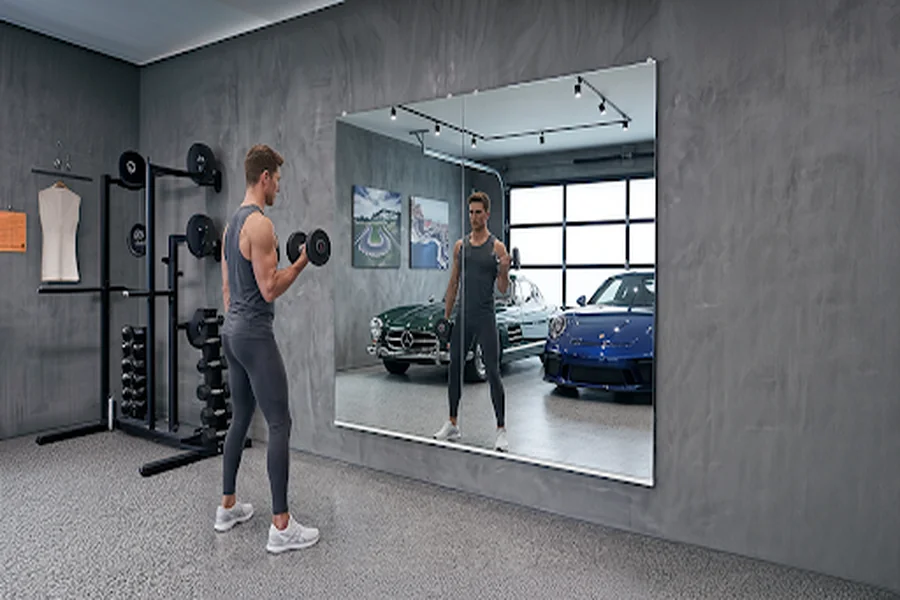
A gym mirror is more than a decorative feature. The right mirror can make it easier to monitor exercise technique, improve spatial awareness, and make a workout area feel more open. But choosing one involves more than finding the largest reflective surface available. Large full-length wall mirrors for gym are available in different dimensions, glass thicknesses, mounting styles, and safety configurations, and those differences matter when the mirror will be installed in a workout environment.
Whether you’re planning a home gym, garage gym, yoga room, dance studio, or commercial fitness facility, the key is to match the mirror to the space, activity, wall structure, and expected use.
Why Full-Length Mirrors Matter in a Gym
The primary purpose of a fitness mirror is visual feedback. During strength training, users can observe body alignment, range of motion, and positioning. In yoga, Pilates, and mobility work, a larger reflection can make it easier to check posture and symmetry.
A full-height mirror is particularly useful because it allows the entire body to remain visible during standing exercises. Smaller decorative mirrors may work in bathrooms or bedrooms, but they can leave out the feet, head, or portions of the movement being evaluated.
There is also a spatial benefit. Large wall mirrors reflect light and surrounding surfaces, which can make compact workout rooms appear more spacious. This doesn’t actually increase the room’s dimensions, of course, but the visual effect can make a basement, spare bedroom, or garage gym feel less confined.
Gym mirrors commonly appear in formats such as approximately 36 × 72 inches, 48 × 72 inches, and even wider configurations. Full-length and oversized gym mirrors are also frequently categorized alongside frameless and shatter-resistant options.
How to Choose the Right Mirror Size
Mirror size should be based on both the user’s height and the type of movement performed in front of it. For individual home workouts, a mirror around 36 × 72 inches can provide substantial full-body coverage without consuming an entire wall. Wider mirrors become more useful when two or more people need to exercise simultaneously or when the room is designed for movement-based activities.
For example, a yoga or dance space generally benefits from greater horizontal coverage because users may move laterally across the room. A strength-training area may require less width if the mirror is positioned directly behind a squat rack or lifting zone.
Don’t automatically assume that bigger is better. An oversized mirror can become difficult to transport, handle, and install. It may also require more substantial mounting preparation. Measure the wall first, identify outlets and switches, and account for equipment that may eventually sit in front of the mirror.
What Glass Type Is Best for a Gym?
Glass selection is one of the most important decisions because a gym is not the same environment as a bedroom or hallway. Tempered glass is commonly used where improved impact performance and safety are important. When properly manufactured, tempered glass is stronger than ordinary annealed glass and is designed to break into smaller, relatively blunt fragments rather than large sharp shards when it fails.
Safety-backed mirrors add another layer of protection. A safety backing can help retain broken glass and reduce the likelihood of fragments separating from the mirror. This is particularly relevant in spaces where people are exercising, lifting weights, or moving equipment nearby.
Gym mirrors prominently feature tempered glass and safety-backed configurations, demonstrating that these specifications are established considerations within the category rather than merely aesthetic upgrades.
However, “tempered” should not be treated as a substitute for proper installation. A tempered mirror can still break if it is improperly handled, damaged at an edge, subjected to unsuitable mounting stress, or installed against an incompatible surface.
Frameless vs. Framed Gym Mirrors
Frameless mirrors are popular in fitness environments because they provide a clean, continuous appearance. When multiple panels are installed next to one another, the absence of bulky frames can help create a more seamless reflective wall.
Framed mirrors have their own advantages. A frame can provide visual definition and may complement a finished home gym, studio, or multipurpose room. The downside is that framing introduces additional visual breaks and can reduce the uninterrupted reflective area.
For a commercial gym or dance studio, frameless wall-mounted panels are often more practical when the goal is broad visual coverage. Retail search results in the U.S. currently show strong availability of frameless, full-length gym mirrors, including multi-piece configurations designed to cover larger walls.
Wall-Mounted Panels vs. One Oversized Mirror
One large mirror may appear simpler, but multiple panels can offer practical advantages. Panelized installations are easier to distribute across a wide wall and can make transportation and handling more manageable. They also allow installers to cover different wall sections without requiring one enormous piece of glass.
On the other hand, multiple panels introduce seams. If the panels are not carefully aligned, the finished installation can look uneven. For exercise environments where users rely on reflections to evaluate movement, noticeable distortions or misalignment between panels can also become distracting.
The best configuration depends on wall dimensions, access to the installation area, transportation limitations, and whether uninterrupted reflection is important.
Where Should a Gym Mirror Be Installed?
Placement affects usefulness just as much as size. For strength training, mirrors are commonly positioned where users can observe their movement during exercises such as squats, lunges, presses, and mobility drills. A mirror placed directly behind equipment may be less useful if racks, benches, or machines block much of the reflection.
In a yoga or dance room, the mirror should cover the primary movement zone rather than simply filling an empty wall. Consider the viewing position from several points in the room, not just from the center.
Garage gyms require additional planning. Temperature fluctuations, wall construction, moisture exposure, and uneven surfaces can complicate installation. A mirror should not be selected solely by its dimensions without considering the actual condition of the mounting surface.
How High Should a Gym Mirror Be Mounted?
There is no universal mounting height that works for every gym. The objective is to provide useful full-body visibility from the positions where people actually exercise. A standing user should be able to see their head and feet without needing to step excessively far away from the wall.
The mirror’s dimensions, ceiling height, user height, and exercise type all influence placement. A dance studio may require a different installation strategy from a small home weight room.
Before permanent installation, mark the proposed mirror boundaries on the wall using painter’s tape. Stand in the intended workout area and check the reflection from several positions. This simple planning step can reveal problems before expensive glass is installed.
Installation Is a Safety Issue, Not Just a Finishing Detail
Large glass mirrors are heavy and require appropriate mounting hardware and installation practices. The wall must be capable of supporting the load. Drywall alone should not automatically be assumed to provide adequate structural support for a heavy mirror. Depending on the wall construction and mounting method, installers may need to locate studs or use an appropriate structural support system.
The mirror should also be handled carefully around edges and corners. Even glass products designed for improved safety can be damaged through improper handling.
For large or unusually heavy installations, professional installation is worth considering. The cost of installation is small compared with the consequences of a poorly secured mirror in an active workout environment.
Avoiding Distortion in Large Mirrors
A large mirror is only useful if the reflection is reasonably accurate. Distortion can occur because of manufacturing characteristics, glass quality, installation pressure, wall irregularities, or an improperly supported mirror. A mirror that looks acceptable in isolation may show noticeable visual problems when used for movement analysis.
This is especially important for strength training and dance. If a person’s body appears subtly stretched, compressed, or warped, the mirror becomes less useful for checking technique.
The wall itself matters, too. A bowed or uneven wall can transfer pressure to the glass. Proper preparation and installation therefore contribute to reflection quality as well as safety.
How Much Wall Coverage Do You Actually Need?
Instead of choosing a mirror based only on its advertised dimensions, calculate the amount of active workout space that needs visual coverage.
A single-user home gym may not need an entire wall covered from floor to ceiling. A dedicated dance studio, group fitness room, or commercial gym may benefit from much broader coverage.
Gym mirror configurations ranging from individual full-length panels to extremely wide wall-mounted systems, including products around 96 inches wide.
This variety reflects an important point: mirror planning should begin with the room and activity, not with a predetermined product size.
Common Mistakes to Avoid
One of the most common mistakes is buying a mirror before measuring the wall. Door swings, electrical outlets, baseboards, equipment, and wall irregularities can all affect the usable area.
Another mistake is focusing on appearance while ignoring safety specifications. A beautiful frameless mirror is not automatically appropriate for a gym simply because it is large.
Installation is another frequent blind spot. A heavy mirror requires more planning than hanging a small decorative mirror. The mounting method, wall construction, hardware, and installation technique all matter.
Finally, avoid assuming that multiple inexpensive mirrors will automatically produce a professional result. Seams, inconsistent glass quality, mismatched dimensions, and alignment problems can make a large installation look improvised.
What Makes a Gym Mirror a Good Long-Term Investment?
The value of a gym mirror comes primarily from how effectively it supports the intended activity. A well-planned installation can improve exercise visibility, help users monitor form, enhance spatial perception, and contribute to the overall functionality of the room. Those benefits can remain useful for years, provided the mirror is properly installed and maintained.
For a home gym, the best choice is usually the size that provides meaningful full-body visibility without overwhelming the available wall. For a commercial facility, durability, safety, coverage, and maintainability become increasingly important.
The most effective approach is therefore not to search for the biggest mirror available. Instead, determine the required viewing area, select an appropriate glass and safety configuration, evaluate the wall structure, and plan the installation before purchasing.
A large full-length wall mirror for gym should ultimately be treated as part of the gym’s functional design rather than simply another piece of décor. When size, glass construction, placement, and installation are considered together, the mirror can provide useful visual feedback while fitting naturally into the space.