
7-Day Annapurna Base Camp Trek: What to Expect on the Journey to 4,130m
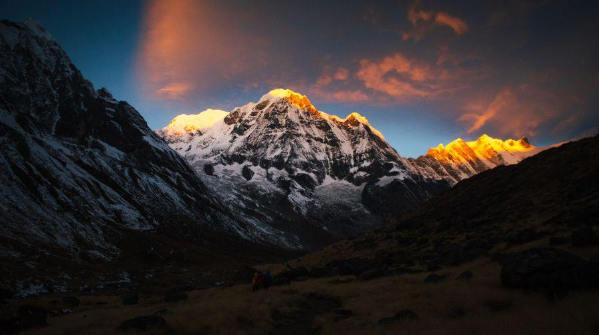
The 7 Days Annapurna Base Camp Trek is a compact Himalayan adventure for travelers who want to reach the heart of the Annapurna Sanctuary without committing to a longer itinerary. The journey begins and ends in Pokhara, reaching a maximum elevation of 4,130 meters at Annapurna Base Camp.
Along the way, the trail passes through Gurung villages, rhododendron and bamboo forests, river valleys, and increasingly alpine landscapes. The trek is rated moderate, but the short schedule requires reasonable fitness and the ability to walk for several hours on consecutive days.
Unlike a longer ABC itinerary, this seven-day version moves quickly toward the higher sections of the route. That makes it particularly useful for travelers with limited time, but it also means there are fewer opportunities for relaxed walking and rest. Understanding the route, altitude, daily distances, and seasonal conditions is therefore important before setting out.
Can You Really Reach Annapurna Base Camp in Just 7 Days?
Yes. The seven-day itinerary reaches Annapurna Base Camp on the fourth day and returns to Pokhara on the seventh. The route is designed to reduce time spent on the lower sections while still taking trekkers through the main landscapes of the Annapurna Sanctuary.
However, seven days does not mean the trek is easy. The itinerary involves several long walking days, with some stages taking around seven to eight hours. There are repeated uphill and downhill sections, numerous stone steps, and a significant increase in elevation. The short schedule is therefore better suited to travelers who already have reasonable endurance and are comfortable with demanding mountain walking.
What Does the 7-Day Annapurna Sanctuary Route Look Like?
The journey starts around Pokhara and follows the trail toward Ghandruk, one of the region’s prominent Gurung settlements. From there, the route continues through Chhomrong and Upper Sinuwa before entering the forested Modi River valley. Bamboo, Dovan, and Deurali mark the progression toward higher terrain.
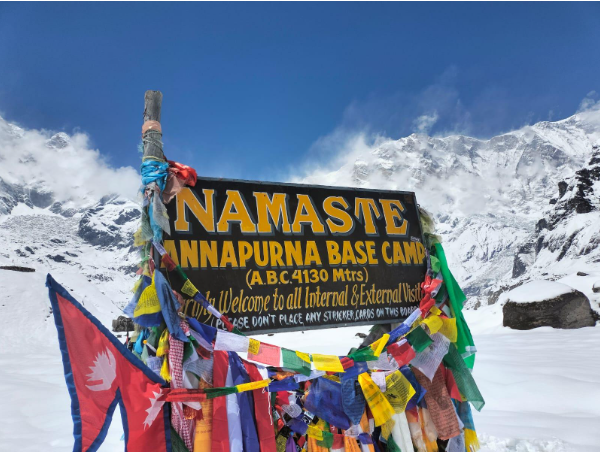
Above Deurali, the landscape changes noticeably. Forest becomes less dominant, and the trail approaches Machhapuchhre Base Camp before entering the Annapurna Sanctuary. 7-days Annapurna Base Camp Trek stands at 4,130 meters and is surrounded by major Himalayan peaks, including Annapurna I, Annapurna South, Hiunchuli, and Machhapuchhre. After reaching the sanctuary, the route descends through Bamboo and Jhinu Danda before returning to Pokhara.
Your 7-Day Journey From Pokhara to Annapurna Base Camp
Day 1: Pokhara to Ghandruk
The first day combines road travel and trekking. A four-wheel-drive journey from Pokhara takes about three hours toward the trailhead, after which the walk continues to Ghandruk at 2,012 meters. The trek takes around four to five hours.
Ghandruk is an important Gurung village and provides an early introduction to local culture and mountain life. The surrounding area offers views toward Annapurna South, Hiunchuli, Machhapuchhre, Gangapurna, and Annapurna III.
Day 2: Ghandruk to Upper Sinuwa
The second day is one of the longer stages, requiring approximately seven to eight hours of walking. The route passes through Kimrung Danda and Kimrung River before reaching Chhomrong and continuing toward Upper Sinuwa at 2,345 meters.
The trail combines village scenery with forested sections and mountain views. Chhomrong is one of the larger settlements along this part of the route, with local teahouses, bakeries, and places to stop before continuing higher.
Day 3: Upper Sinuwa to Deurali
From Upper Sinuwa, the trail climbs through Bamboo, Dovan, and Himalaya before reaching Deurali at approximately 3,700 meters. The walking time is around seven to eight hours.
Much of the route follows forested terrain alongside the Modi River. As the elevation increases, the vegetation gradually becomes thinner. Deurali is the final major lodge area before the trail continues toward Machhapuchhre Base Camp and the Annapurna Sanctuary.
Day 4: Deurali to Annapurna Base Camp
This is the main objective of the trek. From Deurali, the trail climbs toward Machhapuchhre Base Camp at about 3,900 meters before continuing into the Annapurna Sanctuary. The final destination is Annapurna Base Camp at 4,130 meters, reached after approximately five to six hours of trekking.
The higher trail provides increasingly expansive views of the surrounding peaks and glaciers. At ABC, the mountain amphitheater creates the defining experience of the journey, with Annapurna I and other major peaks rising around the sanctuary.
Day 5: Annapurna Base Camp to Bamboo
After spending time at the base camp, the route turns downhill toward Bamboo at 2,335 meters. The trail passes through Machhapuchhre Base Camp, Deurali, Himalaya, and Dovan before returning to the forest. This is another seven-to-eight-hour walking day.
Although descending generally requires less cardiovascular effort than climbing, the long downhill sections can be hard on the knees. A controlled pace and careful footing are particularly useful on uneven sections.
Day 6: Bamboo to Jhinu Danda
The trail continues from Bamboo toward Jhinu Danda at approximately 1,700 meters. The route includes both ascents and descents before reaching the village after around five to six hours.
Jhinu Danda is particularly popular for its natural hot springs beside the Modi River. After several demanding days at higher elevations, this provides an opportunity to relax while enjoying the surrounding mountain environment.
Day 7: Jhinu Danda to Pokhara
The final day starts with a short downhill walk toward Samrung Khola. From there, the journey continues by vehicle to Pokhara, taking approximately four hours. The road passes through settlements and areas including Kimrung, Syauli Bazaar, Birethati, Nayapul, Kande, and Naudanda.
How Much Walking Is Involved in a 7-Day ABC Trek?
The short route covers approximately 56 to 70 kilometers, depending on the route and number of trekking days. The seven-day itinerary includes several stages of five to eight hours, with Days 2, 3, and 5 among the longer walking days.
The route is not technically difficult in the mountaineering sense, but its physical demands should not be underestimated. Long stair sections, repeated elevation changes, and the rapid progression toward 4,130 meters make stamina important.
What Is the Hardest Part of the Annapurna Base Camp Trek?
The biggest challenge is the combination of distance, elevation, and consecutive walking days. The trail contains substantial uphill and downhill sections, while the short itinerary compresses a journey that is normally completed at a slower pace.
The approach to the higher elevations can feel particularly demanding. Trekkers should therefore build endurance before departure through regular walking, running, cycling, stair climbing, or other cardiovascular exercise. Good physical preparation can make the long days considerably more manageable.
What Happens to Your Body Above 3,000 m on the ABC Trail?
Altitude becomes increasingly important as the trail climbs beyond Deurali. Annapurna Base Camp reaches 4,130 meters, making it the highest point of the trip. The shorter itinerary also means that trekkers gain elevation relatively quickly, so paying attention to physical symptoms is essential.
Headache, dizziness, nausea, unusual fatigue, or loss of appetite can indicate that your body is struggling with altitude. Walking at a controlled pace, staying hydrated, avoiding alcohol, and communicating symptoms early are sensible precautions. The route information also recommends not rushing and remaining on established trails.
Which Months Give You the Best ABC Trekking Conditions?
Spring and autumn are the preferred seasons for this trek. Spring, from March to May, brings warmer conditions and blooming rhododendrons across the lower and middle sections of the trail. Autumn, from September to November, generally provides stable weather and clear mountain views.
Winter is possible but brings much colder conditions at higher elevations. Monsoon months can create wetter and more challenging trail conditions, including rain, slippery paths, and potential landslide or stream-crossing problems. For a compressed seven-day itinerary, stable weather is particularly valuable because there is less flexibility if poor conditions cause delays.
What Are Teahouses, Meals and Daily Facilities Like?
Accommodation along the route is provided in local guesthouses and teahouses. The package information lists hotel or lodge accommodation and includes breakfast, lunch, and dinner during the trekking itinerary. Hot tea or coffee and fresh fruit are also included in the listed package.
Facilities become simpler as the trail climbs. Trekkers should also expect additional personal expenses for services such as hot showers, charging, laundry, drinks, and other items that are not included in the package.
What Do You Need Before Starting the 7-Day ABC Trek?
The listed package includes the required Annapurna Conservation Area permit and a licensed mountain guide. Travel and rescue insurance are not included, so trekkers should arrange appropriate coverage before starting the journey. A porter is available as an optional service.
Packing should remain practical because the route involves long walking days. Warm layers, suitable trekking footwear, a water bottle, personal medication, rain protection, and a sleeping bag are among the useful items to consider. The package information states that porter service can carry up to 18 kilograms shared between two trekkers.
What Should You Budget for Seven Days in the Annapurna Region?
7-day package at $525 for 1 person, $485 for 2–7 people, and $450 for 8–15 people. It also gives the exact itinerary and daily elevations, so those should be used rather than generalized figures. The package includes trekking meals, a licensed guide, the ACAP permit, specified transportation, accommodation, hot tea or coffee, fresh fruit, and a medical kit.
Personal expenses remain separate. These can include travel and rescue insurance, optional porter service, drinks, showers, charging, laundry, personal purchases, and tips. Because the package price can vary according to group size and arrangements, travelers should confirm the current price when booking.
Is ABC the Right Trek Compared With Other Routes?
The appeal of this route lies in how much scenery and cultural variety it provides within a short period. Compared with the Annapurna Circuit, it focuses on reaching the Annapurna Sanctuary rather than completing a large circuit around the massif.
The route also avoids the Thorong La Pass, which is reached on the Annapurna Circuit at a substantially higher elevation. Instead, the ABC trek follows the Modi River valley toward the sanctuary and returns through the same general corridor. This makes it an appealing option for travelers who want high-mountain scenery without undertaking a high-pass circuit.
How to Prepare for the 7-Day ABC Trail
Preparation should focus on endurance rather than technical climbing skills. Regular long walks, stair training, running, cycling, and lower-body strengthening can help prepare the legs for the repeated climbs and descents.
Because several days require six to eight hours of walking, it is useful to train consistently before departure. Comfortable trekking shoes should be broken in before the trip, while warm layers and weather protection are important for the higher sections. Keeping your backpack as light as practical can also make the long days easier.
Questions Travelers Ask Before Booking a 7-Day ABC Trek
Is 7 days enough to reach Annapurna Base Camp?
Yes. The itinerary reaches Annapurna Base Camp on Day 4 and returns to Pokhara on Day 7. However, the schedule is physically demanding and requires reasonable fitness.
Is the 7-day ABC trek suitable for beginners?
It can be suitable for beginners who are physically prepared, but it should not be considered an easy walk. The long days, steep sections, and rapid elevation gain require good stamina and preparation.
What is the highest altitude reached on the trek?
The highest point is Annapurna Base Camp at 4,130 meters (13,550 feet).
What is the best time for the 7 Days Annapurna Base Camp Trek?
Spring and autumn are generally the most favorable seasons. March to May offers rhododendron blooms, while September to November is known for stable conditions and clear Himalayan views.
Conclusion: Is Seven Days the Right Amount of Time for Annapurna Base Camp?
The 7-Day Annapurna Base Camp Trek is a practical choice for travelers who have limited time but still want to experience the Annapurna Sanctuary. It combines traditional Gurung villages, forested valleys, high-altitude landscapes, and the spectacular mountain amphitheater around Annapurna Base Camp.
The trade-off is intensity. With several seven- to eight-hour walking days and a rapid climb to 4,130 meters, the itinerary demands better preparation than a slower version of the trek would. For travelers with good endurance who understand the demands of the route, seven days can deliver an impressive Himalayan experience without requiring a much longer holiday.
We’re Nepal High Trek And Expedition Pvt. Ltd., based in Kathmandu, specializing in treks, climbs, and more for solo travelers and private groups.
Contact us at info@nepalhightrek.com or WhatsApp +977 9851142116.