
What Is a Refurbished Phone? A Guide for Australians
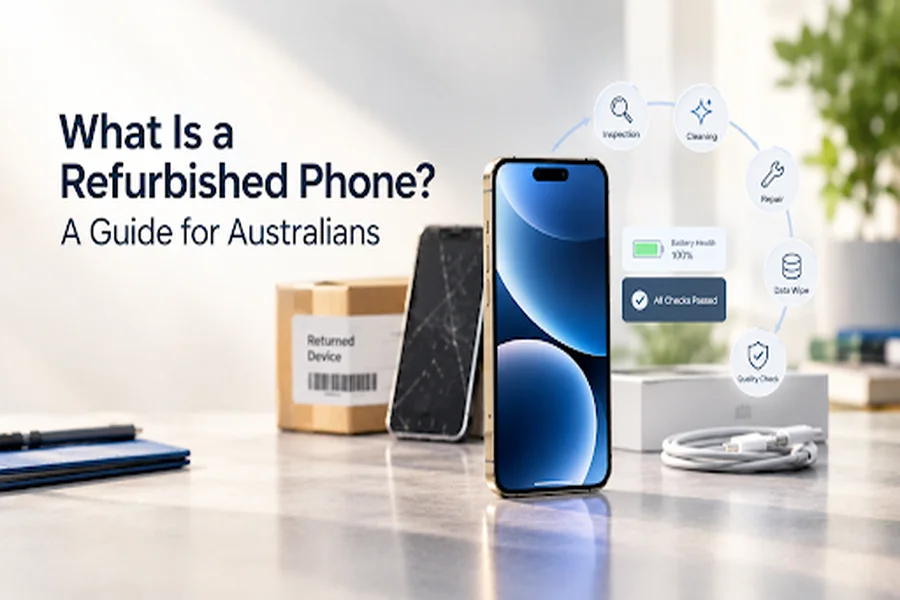
A refurbished phone can offer the features of a well-known model without the price of buying it brand new. But what exactly has been done to the phone before it is ready to be sold again?
A properly refurbished phone has been inspected, securely data-wiped, cleaned, reset and tested to confirm that its key features work correctly. Any necessary repairs are completed before the device is graded and prepared for resale. Because refurbishment standards vary between sellers, buyers should also compare the phone’s condition, battery information, software support, warranty and returns.
What Does Refurbished Actually Mean?
A refurbished phone is more than a device being sold for a second time. Before it reaches its next owner, it goes through a structured process to assess its condition, test its functionality and identify anything that needs attention.
Phones enter the refurbishment process in different ways. A device may come from a trade-in, customer return, business device upgrade, display model or excess stock. Some have been used regularly, while others may have had very little use.
Their histories may differ, but the purpose of refurbishment remains similar: to assess and prepare a suitable phone for resale.
This preparation is what generally separates a refurbished phone from an ordinary second-hand sale. The previous owner’s data and accounts are removed, key functions are tested, the device is cleaned and its cosmetic condition is graded. If a component needs attention, it may be repaired or replaced before the phone completes its final checks.
What Happens When a Phone Is Refurbished?
The exact refurbished phone testing process varies between sellers, but it commonly includes:
- Removing previous personal data and account connections.
- Resetting and physically inspecting the device.
- Testing the screen, cameras, microphones, speakers and buttons.
- Checking charging, Wi-Fi, Bluetooth and mobile connectivity.
- Assessing the battery’s condition.
- Repairing or replacing components where required.
- Cleaning the phone and assigning a cosmetic grade.
- Completing a final functionality check.
A seller should explain what its own process covers. For example, Mobile Guru states that its refurbished phones undergo a 72-point inspection before sale.
A clearly defined testing process provides buyers with more useful information than the word “refurbished” on its own.
Refurbished vs New vs Second-Hand Phones
Refurbished and second-hand phones may both have had a previous owner, but they are not necessarily prepared for resale in the same way.
A refurbished phone generally goes through a structured inspection and testing process before resale. A second-hand phone sold privately may instead be offered largely in its existing condition, so the buyer may need to complete more checks independently.
| Factor | Refurbished phone | Second-hand phone | New phone |
| Previous use | May be returned, displayed or previously owned | Previously owned | Not previously owned |
| Preparation | Generally inspected, tested, cleaned and reset | Varies by seller | Prepared by the manufacturer |
| Repairs | Completed where required under the seller’s process | May or may not be completed | Normally not applicable before first sale |
| Appearance | Based on the condition grade | Based on previous use and condition | New condition |
| Battery | Retained or replaced according to the seller’s standard | Varies by individual phone | New |
| Warranty and returns | Commonly available from business retailers; terms vary | Consumer protections differ in private sales | Normally provided by a business seller |
| Price | Commonly below an equivalent new model | Varies with age and condition | Usually the highest |
Related terms can also cause confusion. Pre-owned and second-hand mainly describe previous ownership, while renewed is often used by sellers as another term for refurbished. Certified refurbished generally indicates that a particular manufacturer, retailer or programme has assessed the device according to its own refurbishment standards.
Because these terms are not always used consistently, buyers should look beyond the label and compare the testing, grading, battery and warranty information behind it.
Price, Choice and Environmental Impact
Price is one reason Australians consider refurbished phones, but purchase price is only one part of overall value. The price of a refurbished phone can reflect its model, storage capacity, age, cosmetic grade, battery standard and the warranty or support included with the purchase.
Refurbished stock can also provide access to earlier flagship devices, Pro models or storage capacities that may no longer be widely available as new. Buyers who do not need the latest release can therefore compare features across several generations.
Refurbishment also keeps usable technology in circulation for longer. This cycle can begin when an owner chooses to sell an old phone or trade it in rather than leave it unused.
Mobile Guru Australia states that eligible sellers receive free Express Post shipping and that payment is processed within 24 hours once a device has been received, inspected and approved. If an inspection leads to a revised offer that the seller declines, its published process provides for the device to be returned.
Suitable devices can then move through assessment and reuse processes, extending the useful life of existing technology.
What Determines the Quality of a Refurbished Phone?
There is no single refurbishment standard used by every seller. Two phones with the same model and storage capacity can still differ in appearance, battery condition, previous use, replacement components and warranty coverage.
Looking at these factors individually gives buyers a clearer picture of what they are purchasing.
Condition, Grade and Appearance
A condition grade helps buyers understand how a refurbished phone is likely to look. It generally describes cosmetic appearance rather than determining whether the phone can perform its everyday functions.
Common grade descriptions may include:
- As New: Usually shows no visible wear or only very faint marks.
- Excellent: May have minor marks that are difficult to notice during normal use.
- Very Good: May show light scratches or signs of previous handling.
- Good or Fair: May have more noticeable scratches, scuffs or small dents while remaining functional.
A phone with visible cosmetic wear can still perform as intended if it has passed the seller’s functional testing.
However, grade names are not standardised across the industry. An “Excellent” phone from one retailer may not have exactly the same cosmetic standard as an “Excellent” phone from another.
Buyers should therefore read the seller’s grading guide and check whether product photographs show the individual device or are representative images of the model.
Battery and Replacement Parts
A refurbished phone does not automatically receive a new battery or entirely new internal components. Existing components may be retained when they meet the refurbisher’s required standard, while parts that require attention can be repaired or replaced.
When comparing phones, check:
- Battery assessment: How battery condition and charging performance are tested.
- Minimum battery standard: Whether the seller publishes a minimum battery-health requirement.
- Battery replacement: When the seller replaces a battery.
- Replacement components: What approach is taken to screens, cameras, charging ports, speakers and other components.
- Testing after repair: Whether repaired functions are tested again before sale.
- Parts policy: Whether the seller explains the type of replacement parts it may use.
- Warranty coverage: Whether batteries and replacement components are covered and under what conditions.
A replacement component alone does not determine the overall quality of a refurbished phone. What matters is whether the component is appropriate for the device, the repair has been completed correctly and the relevant functions pass the seller’s final checks.
Model Age and Software Support
Refurbishment does not change a phone’s original hardware generation. An older model retains the processor, camera system, display technology and other technical capabilities associated with that model.
The remaining useful life of a refurbished phone can therefore be influenced by:
- Its release year.
- Battery condition.
- Hardware performance.
- Operating-system support.
- Security updates.
- App compatibility.
- How the new owner intends to use it.
An older model may still suit everyday calls, messaging, photography, navigation and apps. Buyers should nevertheless check the manufacturer’s current software-support information for the exact model, particularly when comparing devices they intend to keep for several years.
Australian Network Compatibility
A refurbished phone should also be suitable for use on the buyer’s intended Australian mobile network.
Before ordering, check whether the exact model:
- Is carrier-unlocked.
- Accepts the required Australian SIM or eSIM.
- Supports the intended Australian mobile network and calling requirements.
- Is Australian stock or an imported model.
- Has been disconnected from previous-owner accounts.
- Can receive relevant software and carrier updates.
Australian and overseas versions of the same phone can sometimes use different model numbers or network configurations. Checking the exact model number and the intended network provider’s compatibility information is therefore more reliable than relying on the product name alone.
Carrier-unlocked status should also be confirmed rather than assumed.
Warranty and Returns
Warranty coverage does not change the physical condition of a phone, but it tells buyers what support the seller provides if an eligible issue develops.
Before purchasing, check the warranty period, covered faults, battery terms, applicable exclusions and claim process.
Return policies should also explain:
- How long the return window remains open.
- Whether change-of-mind returns are accepted.
- What condition the phone must be in.
- Who covers return delivery.
- Which repair, replacement or refund options may apply.
Mobile Guru, for example, publishes a 24-month warranty on its refurbished devices, along with its applicable returns policy. Buyers should read the complete terms to understand the coverage, exclusions and conditions that apply to their purchase.
A retailer’s voluntary warranty is also separate from rights provided by the Australian Consumer Law.
The ACCC explains that consumer guarantees apply automatically when eligible products are purchased from businesses. Second-hand goods are also covered, although factors such as the product’s age, price and condition are relevant when assessing acceptable quality.
Private sales are different: most Australian Consumer Law consumer guarantees do not apply to one-off transactions between individuals who are not operating a business, although certain guarantees relating to ownership, possession and hidden debts still apply.
What Should You Check Before Buying a Refurbished Phone?
A refurbished phone should be assessed on more than its advertised price. Before purchasing, compare the individual device, its expected remaining support and the protection provided by the seller.
Use this checklist:
- Model and storage: Confirm the exact model, storage capacity and release year.
- Condition grade: Read the seller’s grading definitions and check the expected level of cosmetic wear.
- Product images: Check whether the listing shows the individual phone or representative images.
- Battery and parts: Review the battery standard and the seller’s policy on repairs and replacement components.
- Unlocked status: Confirm that the phone is carrier-unlocked for use with a compatible Australian SIM or eSIM.
- Account status: Check that previous-owner accounts and activation locks have been removed.
- Device status: Look for information about IMEI or network-blocking checks where provided.
- Australian compatibility: Confirm that the exact model works with the intended Australian mobile network, particularly if it was originally sold overseas.
- Software support: Check whether the model still receives suitable operating-system and security updates.
- Warranty and returns: Review the warranty coverage, exclusions, claim process and return conditions.
- Included items: Confirm which accessories and packaging come with the phone.
- Seller details: Look for clear business information, customer support options and independent reviews.
- Overall value: Compare condition, battery, warranty, support and expected useful life rather than purchase price alone.
Unlocked and account status are good examples of why clear product information matters. Mobile Guru’s refurbished iPhone range in Australia provides information about its devices, grading, battery standards and testing process.
Regardless of the retailer, buyers should look for similarly clear information before ordering.
Are Refurbished Phones Worth Buying?
A refurbished phone can be worth considering when its price, condition and remaining useful life align with what the buyer needs. The key is to compare the individual device rather than assuming that every refurbished phone offers the same quality or value.
Look for a clearly documented testing process, understandable condition grading, suitable battery information, current software and Australian network compatibility, plus transparent warranty and return terms.
For Australians comparing new, refurbished and second-hand phones, these checks make it easier to judge the overall value of the device rather than focusing on price or the “refurbished” label alone.